Year Round Golf Practice That Actually Works
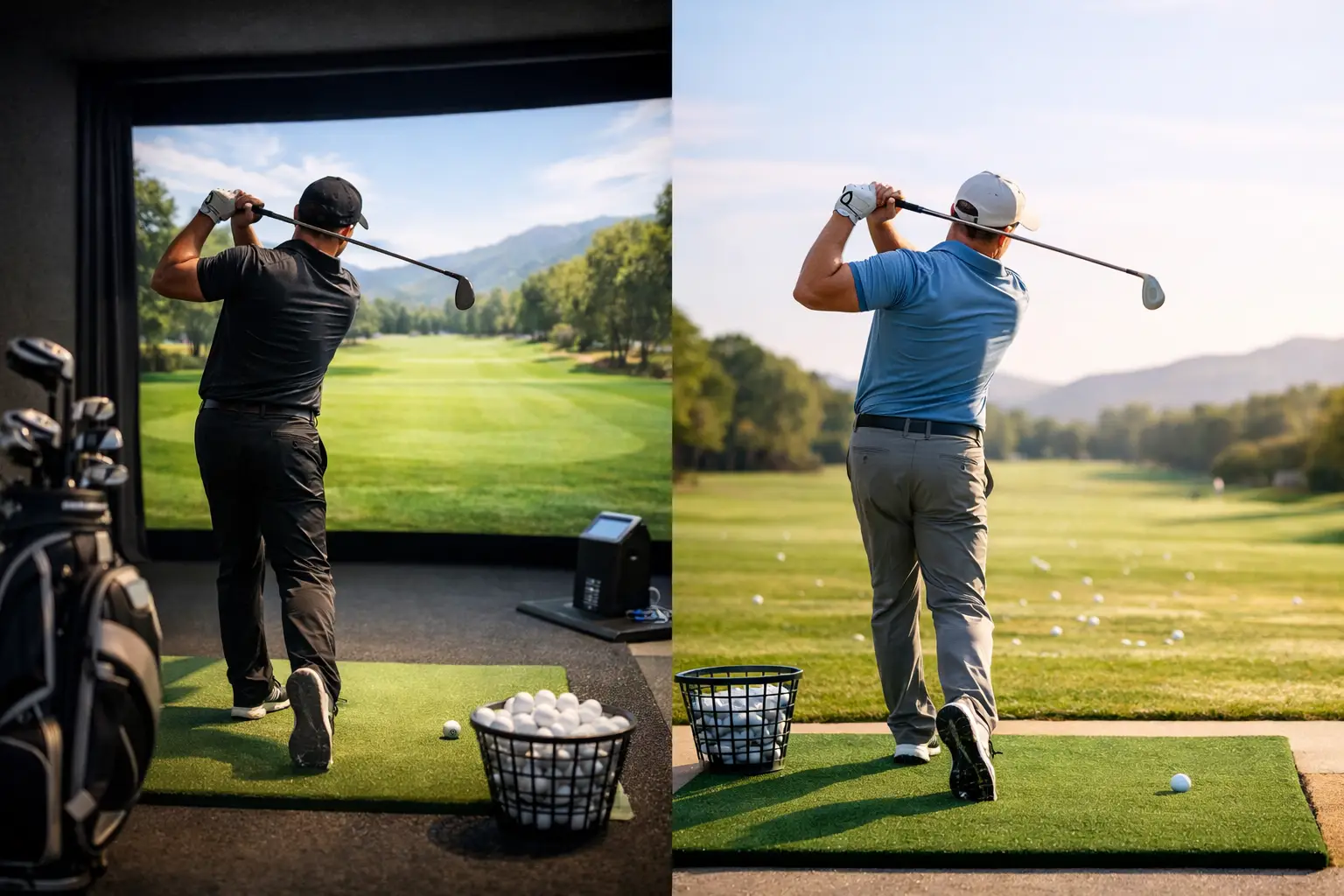
The golfers who improve the fastest are not always the ones who play the most rounds. They are usually the ones who keep their swings, short game, and decision-making active when everyone else drifts into long gaps between sessions. That is what makes year round golf practice so valuable. It removes the stop-start cycle that causes timing, confidence, and feel to disappear just when you need them.
Consistent practice is not only about volume. It is about staying connected to your swing, getting honest feedback, and working in an environment that lets you train with purpose. For some players, that means staying sharp through extreme summer heat. For others, it means avoiding the disruptions that come from travel, work, family schedules, or limited daylight. Either way, the goal is the same – keep improving without waiting for ideal conditions.
Why year round golf practice changes results
Golf is a sport of patterns. Your setup, club path, face control, contact quality, speed, and distance management all depend on repetition. When practice is seasonal, those patterns get interrupted. You spend the first part of every return to golf trying to recover what you already had instead of building something better.
That does not mean every golfer needs to train like a tour player. It means regular touch points matter. Two focused sessions a week over several months will usually beat a burst of random range time followed by three weeks off. The body keeps movement fresh, and the mind keeps course strategy and club selection sharper.
There is also a confidence benefit that is easy to overlook. Players who practice year-round tend to trust what they are doing. They have current information about their ball flight, carry distances, and tendencies. That confidence matters under pressure, whether you are playing in a member event, a weekend money game, a junior tournament, or a casual round with friends.
What year round golf practice should include
A smart practice plan covers more than full swings. If all your sessions revolve around hitting driver and 7-iron, improvement usually stalls. Real progress comes from training the parts of the game that actually shape scores.
Full swing work with measurable feedback
This is where technology can make a real difference. Quality simulator practice gives you more than ball flight on a screen. It provides data that helps explain why the shot happened. Launch direction, spin, carry, club path, and strike location can all reveal whether a pattern is improving or simply repeating.
The key is using that information with intention. If your miss is a pull fade, for example, there is no value in swinging harder and hoping for a different result. Better feedback helps you isolate the issue, make a targeted adjustment, and see whether it holds over multiple shots.
Short game that does not get ignored
Most golfers claim they need to work on wedges and putting, then spend most of their practice time hitting full shots. That is understandable. Full swings are more fun. But year-round improvement usually shows up faster from 100 yards and in.
Short-game training should include distance control, trajectory variation, contact quality, and pressure putting. It also helps to practice from different lies when possible. Golf does not happen from perfect turf every time, and training only from ideal conditions creates a false sense of readiness.
On-course decision-making
Practice should not live only on a mat. The best year round golf practice also includes simulated play or structured on-course scenarios. This is where you test club selection, aim points, risk tolerance, and mental discipline.
Many golfers hit it great in practice and then lose strokes by making poor choices on the course. If you can build rounds into your training, especially in a realistic simulator environment, you start learning how your game performs when every shot has context.
Why realism matters more than most golfers think
Not all indoor practice is equal. If the setup is built only for entertainment, it may be enjoyable, but it can fall short as a training environment. Serious improvement depends on feedback that is accurate and conditions that feel close to the real game.
That is where advanced simulator systems stand apart. Features like moving swing plates, high-speed impact cameras, auto-tee functionality, and multi-surface hitting mats change the quality of practice in a big way. They create more realistic lie conditions, cleaner feedback at impact, and a faster rhythm from shot to shot.
The difference is practical, not just technical. A moving plate forces you to adapt your setup and balance. Impact cameras help you see strike quality instead of guessing. Multi-surface mats ask you to execute different shots, not the same stock swing over and over. Those details make indoor training more transferable to actual golf.
For players in the Phoenix metro area, where extreme weather can turn even a simple range session into a grind, that level of realism matters. It keeps practice available without turning it into compromise.
How to build a routine you will actually keep
The best practice plan is not the one that looks impressive on paper. It is the one you can repeat. Most golfers fail here because they create routines that are too long, too vague, or too dependent on having a wide-open schedule.
Start with frequency. Two or three sessions a week is enough for many players if those sessions have structure. One might focus on full swing and ball striking. Another might center on wedges, putting, and scoring drills. A third can be simulated play, league competition, or a lesson-based session.
Keep each session tied to a clear purpose. If you walk in saying you will just hit balls and see what happens, you are more likely to leave entertained than improved. A better plan sounds like this: today I am checking face control with mid-irons, then working on 40- to 80-yard wedge carries, then finishing with ten pressure putts.
It also helps to track only a few things. Too many swing thoughts or metrics can clutter practice fast. Pick one technical priority and one performance priority. That might be shallowing transition and improving start lines with a 6-iron, or controlling low-point and tightening wedge dispersion. Simple targets create better focus.
Instruction makes practice more efficient
There is a point where self-diagnosis becomes unreliable. You feel one thing, the ball does another, and progress stalls. That is where coaching matters.
A good instructor does more than fix mechanics. They help organize your practice so you spend time on the right problems. Sometimes the issue is technical. Sometimes it is tempo, setup, club selection, or unrealistic expectations. The value of instruction is speed. You stop wasting sessions chasing symptoms and start addressing causes.
This is especially important for juniors and competitive amateurs. They need development plans, not random advice. But recreational players benefit too. If your goal is to play better in weekend rounds, company outings, or local events, targeted coaching can shorten the path considerably.
Competition keeps practice honest
One of the strongest arguments for year-round training is that it keeps you ready to compete, and competition reveals whether your work is holding up. Leagues, simulator tournaments, skills challenges, and structured rounds add just enough pressure to expose weak spots.
That pressure is useful. It shows whether your pre-shot routine is stable, whether your distances are reliable, and whether your short game holds up when a score matters. It also keeps practice fresh. Improvement is easier to sustain when it includes a social and competitive element rather than feeling like another obligation.
For many golfers, this is the sweet spot of an indoor facility built for both performance and enjoyment. You can train seriously, then shift into league play, group events, or a simulated round without losing the quality of the experience.
The trade-off most golfers need to understand
Outdoor golf still matters. Wind, uneven terrain, natural turf, and real green reading cannot be replicated perfectly every time. If you only practice indoors and never test your game outside, there will be a gap.
But the opposite trade-off is often worse. Golfers who rely only on outdoor practice tend to lose consistency when weather, heat, time, or course access gets in the way. So it is not really an indoor-versus-outdoor question. It is about creating continuity. Indoor training gives you reliable reps, measurable feedback, and a controlled place to improve. Outdoor play then becomes the proving ground.
That balance is why year round golf practice works so well. It protects momentum. It keeps your game active. And it gives every kind of golfer, from the beginner trying to build a repeatable swing to the experienced player chasing lower scores, a smarter way to keep moving forward.
If your game always seems to need a reset, the answer may not be more effort. It may be more consistency in the right environment.
Sources and further reading
- Motor learning in golf: a systematic review PubMed
- The golf simulator market: trends and insights National Golf Foundation
- Feedback for promoting motor-skill learning: a meta-analysis PubMed