How High Speed Camera Swing Analysis Helps
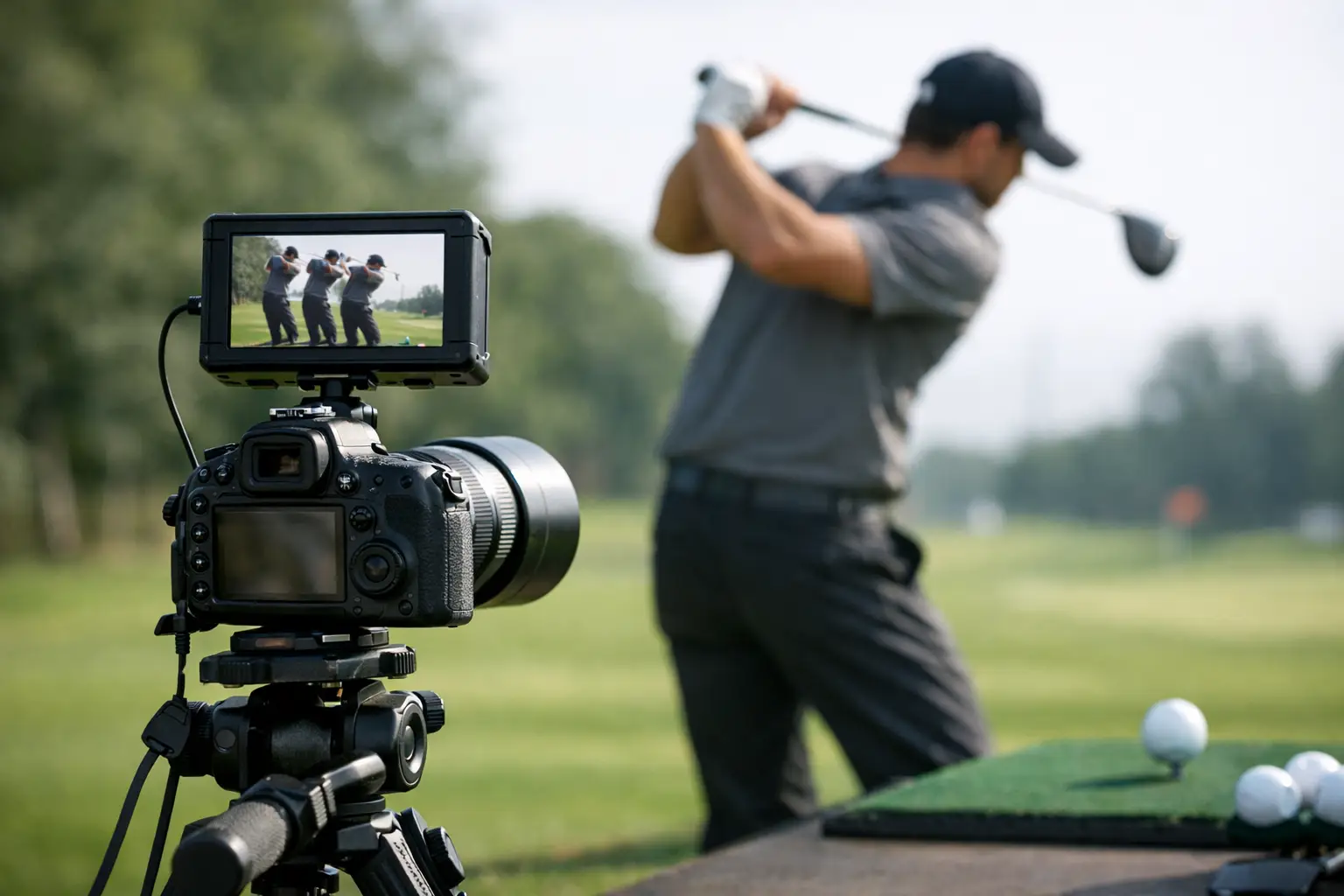
A golfer can make a swing feel completely different and still produce the same miss. That is exactly why high speed camera swing analysis matters. Feel is useful, but impact is where the ball tells the truth, and most swings happen too fast to judge accurately with the naked eye.
For players who want more than guesses, this kind of analysis changes the conversation. Instead of debating whether the face was open, whether the strike was low on the heel, or whether the handle was too far forward, you can actually see it. That clarity shortens the gap between practice and progress.
What high speed camera swing analysis actually shows
Most golfers think of swing analysis as a down-the-line video and maybe a face-on clip. Those views still matter, especially for setup, plane, and body motion. But high speed camera swing analysis focuses on the part of the swing that happens in a blink – the delivery into the ball and the strike itself.
At high frame rates, the camera captures details that standard video misses. You can see where the clubface is pointed just before impact, how the club is entering the turf, where the ball meets the face, and how the strike changes launch conditions. That matters because a swing can look fine in regular speed and still produce poor results through tiny impact errors.
This is where serious improvement often begins. A player may believe the problem is tempo, when the real issue is a face-to-path mismatch. Another player may assume they are hitting it fat because they hang back, when the actual problem is low-point control and shaft presentation. High-speed footage helps separate symptom from cause.
Why impact data matters more than swing guesses
Golfers love swing thoughts because they feel actionable. The problem is that many swing thoughts are built on incomplete information. If you are trying to fix a slice, a weak fade, or inconsistent contact, you need to know what the club is doing at impact, not just what the swing looks like in transition.
The best coaching environments pair visual evidence with measured ball and club data. That combination is powerful because it connects cause and effect. If the camera shows a heel strike and the launch data shows gear effect and side spin, the lesson becomes more precise. If the footage shows a steep angle of attack and the strike pattern confirms it, the fix can target delivery instead of chasing random mechanics.
That is one reason premium indoor training environments have become so effective for player development. When a high-speed impact camera works alongside simulator feedback, you are not relying on one piece of the puzzle. You are seeing motion, strike, and outcome in the same session.
High speed camera swing analysis for common ball-striking problems
This technology is especially useful when the miss pattern keeps repeating but the reason is not obvious.
A player who tops fairway woods may discover the handle is rising through impact. A golfer struggling with pull hooks might see the face closing faster than expected. Someone who hits wedges inconsistently may learn that strike location is moving all over the face, even though the swing feels stable.
Those are different problems, and they need different solutions. That is the real value here. High-speed analysis does not just tell you that something went wrong. It shows what kind of wrong happened.
For better players, the benefits get even more specific. Small changes in face orientation, attack angle, or strike point can separate a controlled stock shot from a miss that costs a hole. Competitive players often do not need a dramatic rebuild. They need cleaner feedback on a narrow performance variable. High-speed footage gives them that level of detail.
For newer golfers, the advantage is just as meaningful. Beginners are often asked to make changes before they fully understand what impact should look like. Seeing contact up close makes instruction easier to trust and easier to repeat.
What to look for during high speed camera swing analysis
Not every swing review is equally helpful. The best sessions focus on a few measurable details rather than trying to fix everything at once.
Strike location is usually the first priority. Center-face contact improves distance control, directional stability, and feel. If contact lives on the toe, heel, high face, or low face, the ball flight will tell that story, but the camera confirms it instantly.
Clubface position is another key variable. Many shots that feel like path issues are really face issues. A golfer may believe they swung too far out-to-in, yet the face may simply have been too open at impact. That distinction matters because the correction is different.
The club’s interaction with the ground is also critical, especially with irons and wedges. Turf-first contact, excessive digging, or a shallow sweep all change shot quality. In a realistic simulator setting with advanced mats and surface variation, that feedback becomes more relevant than it would in a basic hitting bay.
Then there is shaft lean, dynamic loft, and handle position. These are not just technical terms for advanced players. They explain why one golfer launches a 7-iron too high with no compression while another hits a lower, more stable shot. High-speed footage helps those concepts become visible instead of abstract.
Why premium indoor environments make this technology more useful
Technology only helps if the setting supports real practice. That is where the training environment matters.
A premium indoor facility does more than record video. It creates repeatable conditions, captures reliable data, and lets players test changes quickly. If you can hit a shot, review the impact footage, compare the ball data, and hit the next rep with purpose, improvement tends to happen faster.
That is especially true when the simulator system reflects realistic conditions instead of arcade-style golf. Features like moving swing plates and multi-surface hitting mats add context that many players do not get on a flat mat. Lies change. Weight shifts differently. Club delivery gets exposed more honestly. When you combine those elements with high-speed impact footage, the practice session becomes much closer to on-course decision-making and execution.
For golfers in the Phoenix metro area, that kind of controlled, weather-proof training is not just convenient. It makes year-round skill development much easier to sustain.
Who benefits most from high speed camera swing analysis
The short answer is almost everyone, but for different reasons.
Beginners benefit because they can connect instruction to visible results. Recreational golfers benefit because they stop wasting time on the wrong fix. Competitive amateurs benefit because they can fine-tune impact conditions and tighten dispersion. Junior players benefit because visual learning often accelerates understanding. Even experienced golfers returning from time away can use it to rebuild contact and confidence without relying on old habits that no longer hold up.
There is a trade-off, though. Too much detail can overwhelm a player if the coaching is not focused. High-speed footage should simplify improvement, not flood you with ten problems at once. The best use of the technology is targeted. Identify the most important issue, prove it with video and data, and build the next step around that evidence.
How to get more from a swing analysis session
Come in with a purpose. If your driver starts left and keeps going left, say that. If your irons feel solid one day and thin the next, say that. The clearer the problem, the more useful the session becomes.
It also helps to think in patterns, not isolated bad shots. One terrible swing does not mean much. A repeating miss tells a story. High-speed footage is best when it confirms a pattern that keeps showing up on the course or in practice.
Finally, resist the urge to judge a swing only by how it looks. Plenty of swings look unconventional and produce excellent impact. Plenty of pretty swings do not. What matters is whether the motion creates repeatable contact, face control, and playable ball flight.
At a performance-driven facility like 24 Precision Golf, that is where the technology earns its place. It is not there for show. It is there to help golfers practice with more certainty, compete with more confidence, and make their time indoors count.
If you are serious about improving, the fastest gains often start when you stop guessing and start seeing impact for what it really is.