Are Golf Simulators Good Practice? Yes – With Limits
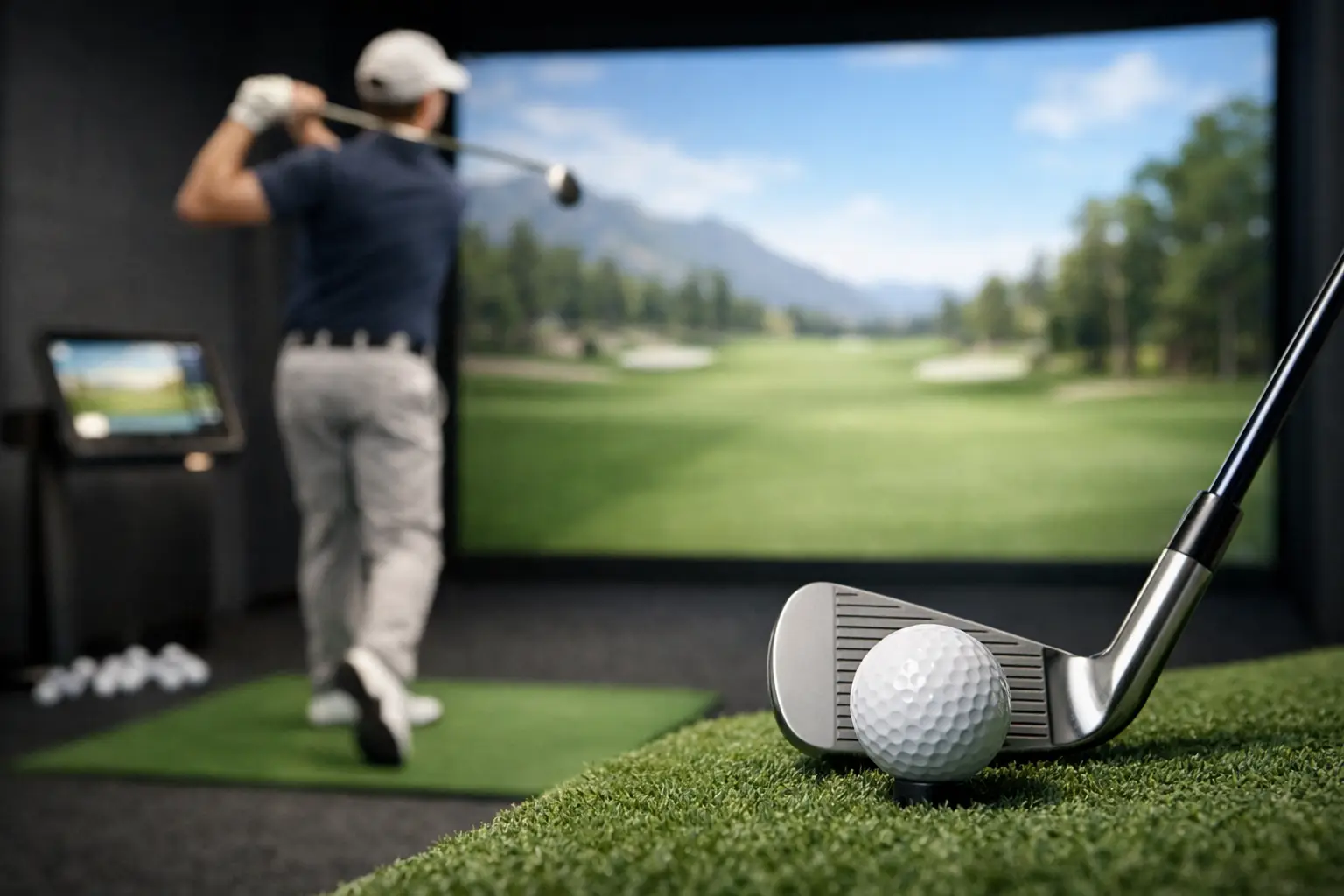
If you have ever walked off the range after 80 balls and still felt unsure what actually changed in your swing, you are asking the right question: are golf simulators good practice? The short answer is yes, but only when the simulator is built for performance, not just entertainment. The quality of the technology, the realism of the hitting environment, and the way you structure your session all determine whether simulator time sharpens your game or just fills an hour.
For serious improvement, a simulator should do more than show a ball flying across a screen. It should tell you what happened at impact, how the club and ball interacted, and whether the result would hold up on a golf course. That is where premium systems separate themselves from basic setups.
Are golf simulators good practice for real improvement?
They can be exceptionally effective because they remove guesswork. On a traditional range, you might see a ball start left or fade right, but you still have to estimate why. Indoors, quality simulator technology gives you immediate shot data and visual feedback. You can see carry distance, launch, direction, spin behavior, and impact details in a controlled setting where weather is not masking the truth.
That control matters more than many golfers realize. Outdoor practice often gets distorted by wind, uneven turf, poor range balls, fading daylight, or simply not being able to tell where a shot truly landed. A strong simulator session cuts through that noise. You can hit the same club repeatedly, track patterns, and make adjustments with a much clearer baseline.
For many players, that leads to faster learning. If your 7-iron is consistently launching too low or your driver is producing a wipey cut with weak spin, you know it immediately. Instead of practicing blindly, you can start working with purpose.
Where simulators help most
The biggest advantage is precision feedback. Advanced systems can capture impact and ball flight data quickly enough to help golfers connect feel with fact. That is a powerful training tool because golf improvement often stalls when players misread their own swings. What feels square may be open. What feels like a centered strike may be slightly thin. Reliable feedback closes that gap.
Simulators are also excellent for repetition. You can hit ten shots with the same club under nearly identical conditions, which makes patterns easier to spot. That is especially useful when you are trying to dial in distances, improve start line control, or test a setup change.
Another strength is efficiency. A productive indoor session usually includes more focused swings in less time. There is no driving to a course only to find the range crowded, no waiting on weather, and no interruption from inconsistent turf conditions. For busy adults, competitive players, and juniors with structured training schedules, that convenience is not just nice to have. It is often the reason practice actually happens consistently.
Then there is realism. Not every simulator delivers it, but high-end environments can get surprisingly close to real golf. Moving swing plates, multi-surface hitting mats, and accurate lie changes force you to adapt instead of making every shot feel identical. That matters because golf is rarely played from a perfect flat lie. If your practice includes uphill, downhill, rough, fairway, and bunker-style conditions, the transfer to the course is much better.
The limits of simulator practice
Simulators are not magic, and they are not a complete replacement for outdoor golf. That is the part some golfers miss.
First, not all systems are equally accurate. A low-end setup may be fun for casual play, but if the data is inconsistent, your practice can drift in the wrong direction. Improvement depends on trust. If the numbers are off, your decisions will be off too.
Second, simulator golf can reduce some of the sensory demands of the real course. You do not feel wind. You do not read actual grain around a green. You are not dealing with uneven ground under your feet on every shot or managing nerves over a real hazard. Even the best indoor environment cannot fully recreate the mental and environmental variables of playing outdoors.
Third, some players fall into a mechanical trap. Because the data is so available, it is easy to become overly technical and chase perfect numbers instead of functional performance. Good practice is not about staring at a screen after every swing. It is about using feedback to improve decision-making, strike quality, and ball control.
That is why the best simulator work usually sits alongside on-course play, short-game practice, and, when possible, instruction.
What makes simulator practice actually work
If your goal is to get better, structure matters. Randomly hitting drivers for 45 minutes is not much different indoors than it is outdoors. Productive simulator practice starts with a plan.
Begin with one clear objective. Maybe you are working on wedge distance control, center-face contact with the driver, or starting short irons on line. A focused session produces better results than trying to fix your entire game in one visit.
Use the data selectively. Look for the numbers that match your goal, not every number on the screen. If you are training distance control, pay attention to carry and dispersion. If you are trying to flight the ball better, launch and spin may matter more. The point is to use feedback as a tool, not a distraction.
It also helps to practice like you play. Hit different clubs. Change targets. Create pressure. Play simulated holes instead of grooving the same swing endlessly. Golf is a game of constant adjustment, and your practice should reflect that.
This is where premium simulator technology has a real edge. A system with high-speed impact cameras, auto-tee functionality, realistic lie settings, and moving plates does more than make the experience feel impressive. It creates a training environment where every rep has context. At a facility like 24 Precision Golf, that kind of setup allows players to move from block practice into something much closer to golf performance.
Are golf simulators good practice for beginners?
Absolutely, and in some cases they are even better for beginners than a traditional range.
New golfers often struggle because they cannot tell the difference between a good swing, a lucky shot, and a miss-hit that happened to work out. Simulators shorten that learning curve. They provide immediate feedback without the intimidation of a crowded range or the frustration of losing sight of every ball.
Indoor practice can also feel more approachable. Beginners can take their time, build confidence, and work with a coach in a controlled setting. That matters because early momentum is important in golf. If someone enjoys the process and sees measurable progress, they are far more likely to stick with it.
For juniors, the benefit is similar. Structured simulator sessions can build fundamentals, awareness, and consistency in a way that is measurable and repeatable. Add professional instruction, and the environment becomes even more effective.
Are golf simulators good practice for low-handicap players?
Yes, but for a different reason. Better players usually do not need more swings. They need better information.
Low-handicap golfers care about precise yardages, strike pattern, launch windows, spin control, and start-line consistency. A quality simulator can expose subtle issues that are hard to diagnose outdoors. It is also ideal for combining technical work with competitive reps, whether that means simulated rounds, skills challenges, or pressure-based practice games.
For accomplished players, the value is less about novelty and more about refinement. When the data is accurate and the environment is realistic, simulator sessions become a reliable way to maintain sharpness year-round.
The best answer is not yes or no
The real answer to are golf simulators good practice is this: they are as good as the system, the realism, and the purpose behind the session. In the right environment, simulators are one of the most efficient tools in modern golf training. In the wrong environment, they are just indoor entertainment with clubs.
If you want simulator practice to translate, look for accurate feedback, realistic playing conditions, and a setup that supports both skill development and actual golf decisions. Add expert coaching when needed, and the value climbs even higher.
The smartest golfers do not ask whether indoor practice counts. They ask whether their practice is honest, measurable, and repeatable – because that is what improvement usually requires.
Sources and further reading
- Motor learning in golf: a systematic review PubMed
- GOLFZON simulator technology GOLFZON
- The golf simulator market: trends and insights National Golf Foundation