Are Golf Simulator Lessons Worth It?
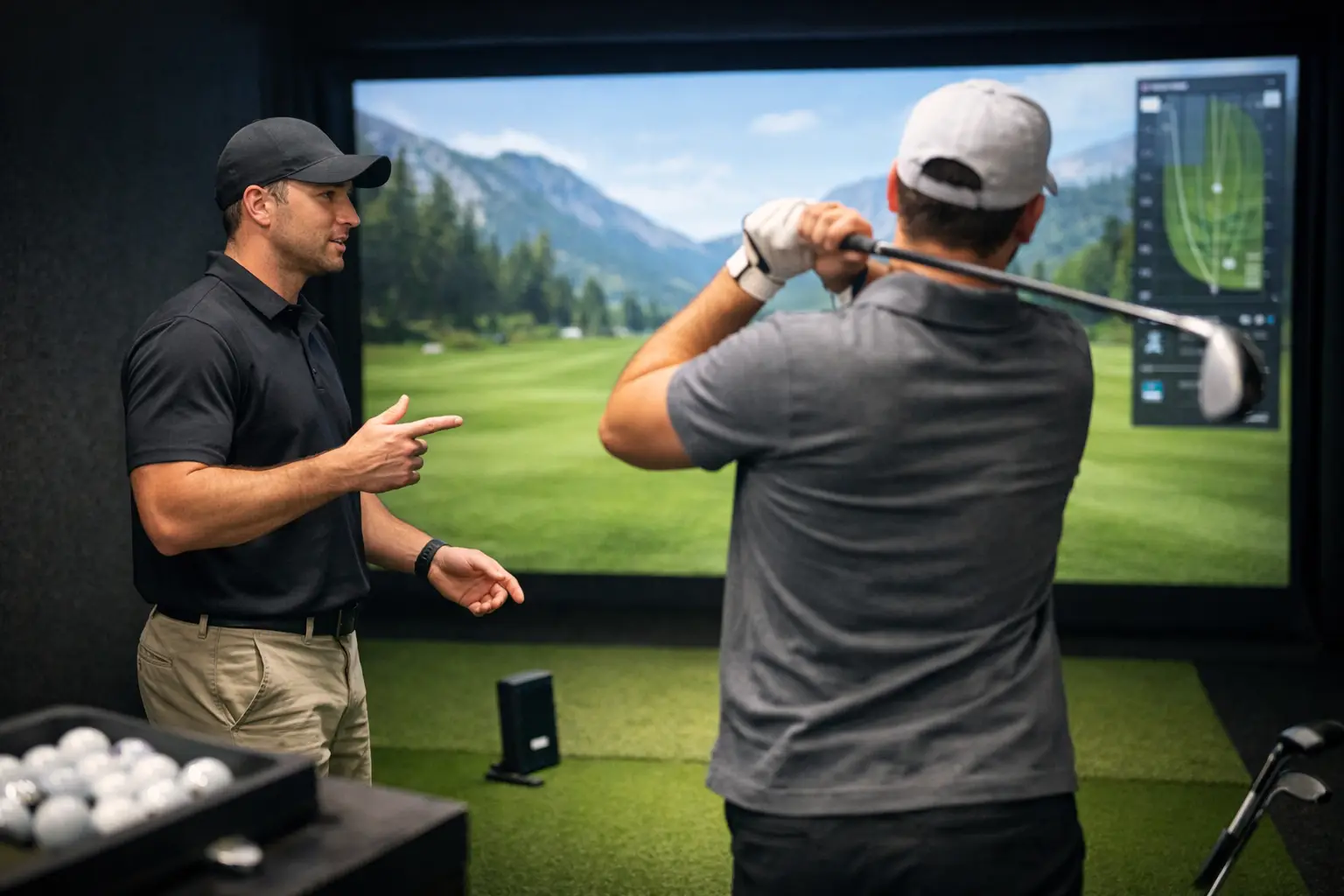
A lesson can feel productive even when it is not. You stripe a few range balls, hear a tip that makes sense, and leave with the vague feeling that progress is happening. Then the next round starts, the ball flight changes, the lie is uneven, and that “fix” suddenly looks less reliable. That gap is exactly why golf simulator lessons have become such a smart option for players who want feedback they can trust.
For golfers who care about improvement, simulator-based instruction is not just indoor convenience. It is a more controlled way to measure what your swing is actually doing, test changes with immediate shot data, and build skills without guessing. The best setups also narrow the gap between practice and on-course play by adding realistic lies, impact visuals, and course conditions that a basic mat-and-net bay simply cannot match.
What makes golf simulator lessons different?
Traditional instruction still has real value. A coach watching ball flight, posture, and movement patterns can diagnose a lot with trained eyes and good communication. But there are limits when lessons rely too heavily on feel, especially for players who struggle to match what they think they are doing with what the club is actually doing at impact.
That is where simulator instruction becomes more powerful. Instead of interpreting every shot through partial information, the coach and player can work from measurable feedback. Launch, direction, contact quality, club delivery, and strike tendencies become visible right away. You are not waiting until the end of the bucket to guess whether the change worked. You can see it shot by shot.
For many golfers, that speeds up learning. It also reduces a common lesson problem: making a swing change that looks better in slow motion but does not produce better ball flight. If the numbers and the shot shape do not improve, the lesson can adjust in real time.
Why serious players benefit from golf simulator lessons
The biggest advantage is precision. Good instruction is always about cause and effect, and simulators make that connection easier to understand. If a player is hitting weak fades, the conversation does not have to stay theoretical. The coach can show whether face angle, path, strike location, or low point is driving the miss.
That kind of clarity matters even more for experienced golfers. Better players usually do not need generic advice. They need small adjustments tied to measurable outcomes. A degree here or a strike pattern there can be the difference between a playable shot and a penalty stroke. In a simulator lesson, those details are easier to capture and repeat.
There is also a consistency advantage. Outdoor practice is shaped by weather, turf quality, range setup, and time of day. Indoor instruction removes many of those variables, so each lesson starts from a more stable baseline. That makes it easier to track progress over time rather than wondering whether the wind, lighting, or poor range balls are distorting the result.
Realism matters more than most golfers think
Not all simulator lessons are equal. Some indoor setups are basically entertainment rooms with launch data. Those spaces can be fun, but they are not always ideal for performance development. If the hitting surface is flat on every shot, lies never change, and impact detail is limited, the lesson may still miss parts of the game that show up on the course.
A premium simulator environment changes that. Moving swing plates, for example, add uphill, downhill, and sidehill conditions so players learn how setup and delivery respond when the ground is not perfectly level. Multi-surface hitting mats help simulate different lie conditions instead of turning every shot into a stock range swing. High-speed impact cameras reveal strike quality with far more clarity than feel alone.
That realism is where indoor coaching becomes more than a convenience play. It starts to resemble performance training. At 24 Precision Golf, that matters because the experience is built around Golfzon technology designed to produce lifelike conditions rather than just digital entertainment. For golfers who want lessons to transfer to real rounds, that distinction is worth paying attention to.
What beginners can expect from simulator-based instruction
Golf simulator lessons are not only for low handicaps or data-obsessed players. Beginners often benefit the fastest because they get a clear picture of what a solid shot is supposed to look like and why poor contact happens.
A new golfer may not yet know the difference between topping the ball, catching it heavy, leaving the face open, or swinging too far from the inside. In a simulator lesson, those mistakes become easier to explain because the coach can tie the movement to visible ball behavior. That tends to make the learning process less frustrating.
It also creates a more comfortable environment. Many beginners feel exposed on a driving range. Indoor instruction feels more private, more focused, and easier to absorb. You are not rushing through a bucket while other golfers stand nearby. You can slow down, ask questions, and build confidence.
Short game and course management should not be ignored
A lot of golfers hear “simulator lessons” and think only about full swings. That is a mistake. A strong indoor lesson program can help with wedges, partial shots, and decision-making as well.
Distance control becomes easier to train when carry numbers are consistent and repeatable. Instead of guessing whether a three-quarter wedge went 65 or 80 yards, players can learn exact windows and build a more reliable scoring system. That has real value on the course, especially for mid-handicaps who lose shots inside 100 yards.
There is also a strategic benefit. Simulated course play can expose patterns that range sessions hide. Maybe your driver is fine, but your misses with a hybrid into long par 4s are creating big numbers. Maybe your approach strategy gets too aggressive from uneven lies. A coach can use that information to make lessons more practical, not just technical.
The trade-offs are real
Indoor instruction is excellent, but it is not magic. A simulator cannot fully recreate wind, temperature, visual depth, or the pressure of standing on the first tee with one ball in play. Some golfers also need periodic outdoor sessions to confirm that a swing change transfers visually and emotionally to the course.
That is why the best answer is usually not simulator lessons versus traditional lessons. It is how to use simulator lessons in the smartest way. For many players, indoor coaching works best as the foundation because it gives precise feedback and year-round consistency. Then on-course play and occasional outdoor work test how well those improvements hold up under less controlled conditions.
It also depends on the facility. The quality of the coach matters. The quality of the technology matters. The realism of the hitting environment matters. If any of those are weak, the lesson experience can feel more like a gadget demo than meaningful instruction.
How to know if golf simulator lessons are right for you
If you are struggling to understand why your ball flight changes from day to day, simulator-based coaching usually helps. If you are a busy adult who wants efficient practice without weather interruptions, it makes even more sense. If you are a junior golfer building fundamentals or a competitive player trying to tighten dispersion, the data and repeatability can be a major advantage.
They are also a strong fit for golfers who want a premium experience. Features like automatic teeing, fast session flow, impact replay, and realistic lie changes reduce wasted time and keep the lesson centered on performance. You spend less time setting up and more time learning.
The players who get the most out of this format usually come in with a goal. It might be gaining distance, improving face control, dialing in wedges, or getting more consistent with irons. Clear goals give the lesson structure, and simulator feedback makes progress easier to measure.
What to look for in a lesson facility
Start with instruction quality. A great simulator does not replace a great coach. You want someone who can translate data into a plan instead of simply reading numbers back to you.
Then look at realism. High-speed cameras, accurate shot tracking, and variable lie conditions matter because golf is not played from one perfect stance on one perfect surface. The closer the training environment gets to actual golf, the more useful the lesson becomes.
Finally, consider whether the facility supports long-term improvement. Can you practice between lessons in the same environment? Can you play simulated rounds, join leagues, or work on short game in a structured way? Progress tends to stick when lessons are part of a broader training routine rather than isolated appointments.
The best golf instruction gives you more than a swing thought. It gives you evidence, context, and a path you can repeat. When simulator lessons are delivered with high-level coaching and realistic technology, they turn practice into something more valuable than effort. They turn it into proof.