Golf Instruction Phoenix Golfers Can Trust
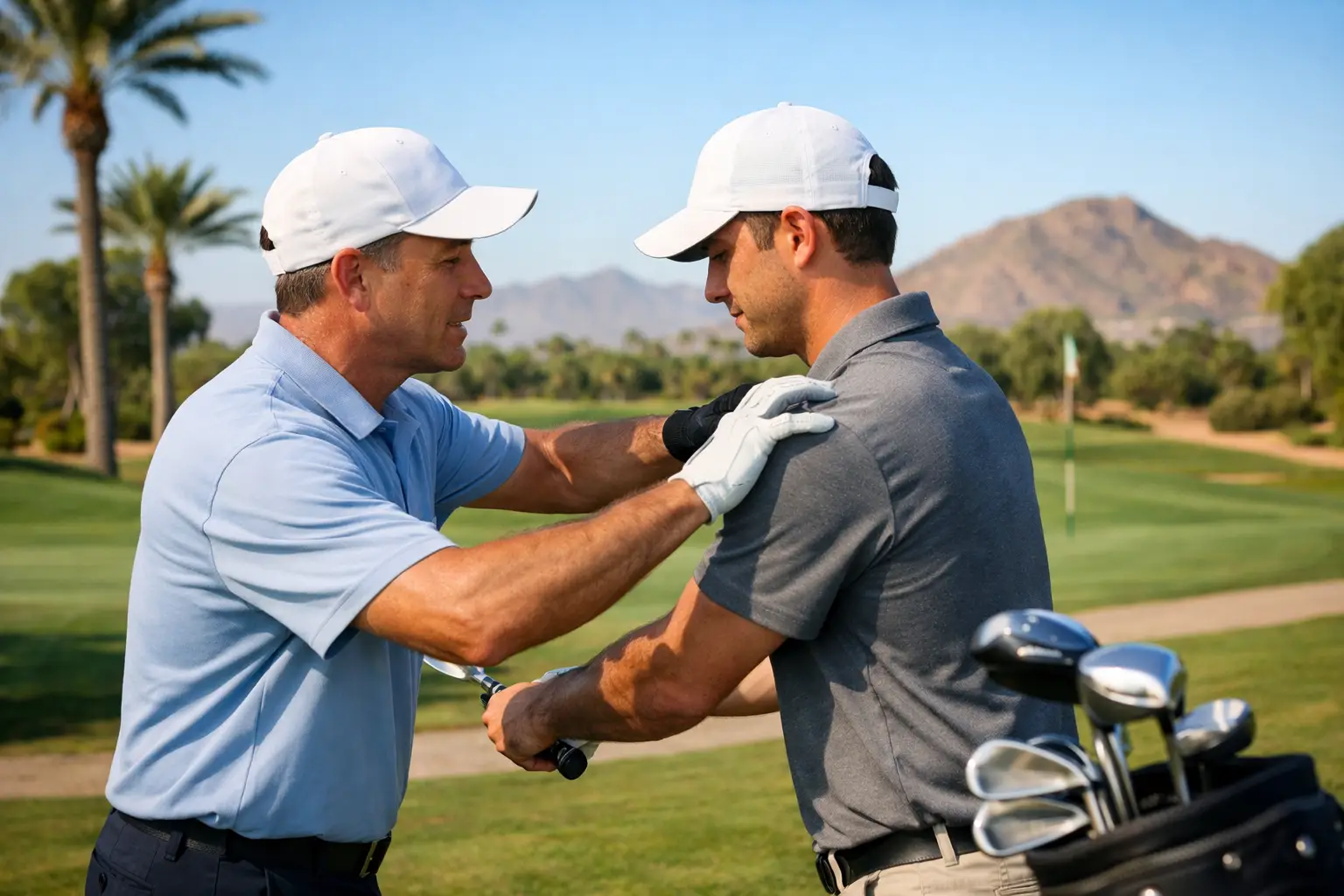
If your practice swings feel solid on the range but disappear on the course, the problem usually is not effort. It is feedback. Great golf instruction Phoenix players can rely on is less about hearing one more swing tip and more about seeing exactly what the club and ball are doing, then making changes that actually hold up under pressure.
That distinction matters in a city where golfers can play nearly year-round and where improvement tends to stall for the same reason – too much guesswork. One lesson focused only on feel might help for a day. A better coaching environment shows you the strike, the path, the face, the start line, and how your motion changes from one shot shape to another. When instruction is built around precise information, progress gets much easier to trust.
What makes golf instruction in Phoenix different
Phoenix has no shortage of golfers who take improvement seriously. Some are new to the game and want to avoid building bad habits. Others are experienced players trying to lower scores, sharpen distance control, or become more consistent under tournament conditions. That means instruction has to serve very different goals, and a one-size-fits-all lesson usually falls short.
The strongest coaching programs do two things at once. They simplify the swing for the student, and they make the diagnosis more sophisticated behind the scenes. That is where indoor technology changes the experience. Instead of relying on ball flight alone or a coach’s eye from ten feet away, players can train with data that shows what happened at impact and why it happened.
For many golfers, that leads to a faster learning curve. You are not just told that you came over the top or left the face open. You can see the pattern repeat, compare one swing to the next, and connect the correction to the result. That shortens the distance between instruction and improvement.
Why indoor golf instruction Phoenix players choose is growing
Outdoor practice still has value. There is no substitute for seeing a full ball flight in open space, and on-course coaching can reveal decision-making issues that range sessions never expose. But indoor instruction solves several problems that often slow golfers down.
First, it removes variables that muddy the lesson. Wind, uneven turf conditions, crowded ranges, and inconsistent range balls can all distort what you are trying to measure. Indoors, the environment is controlled. If your strike improves, you know it improved. If your path changes, you can verify it immediately.
Second, indoor coaching makes repetition more efficient. A lesson does not stop because of heat, rain, darkness, or range availability. For busy adults, that consistency matters as much as the coaching itself. The best players do not just practice hard. They practice often enough for changes to stick.
Third, premium simulator instruction can deliver a more complete picture of the swing than many casual practice setups. High-speed impact cameras, detailed shot tracking, and realistic hitting conditions help players work on mechanics without losing the connection to actual performance. That balance is critical. Golfers do not need more abstract theory. They need better shots.
What to look for in a premium instruction environment
Not all simulator-based coaching is the same. Some indoor venues lean heavily toward entertainment, which can be great for social play but less useful for serious development. If your goal is lower scores and more repeatable ball striking, the setup matters.
Start with the quality of the technology. Advanced simulator systems can measure launch, spin, direction, and carry with impressive consistency, but the best instruction environments go further. Features like moving swing plates and multi-surface hitting mats matter because golf is rarely played from a perfectly flat lie. When the surface changes under your feet, your swing responds differently. Training in conditions that replicate uphill, downhill, and sidehill lies builds a more transferable skill set.
Impact video also changes the conversation. A 400 FPS camera does not just make the lesson feel high-tech. It reveals contact details the naked eye can miss, especially with wedges and irons. If a player is fighting thin shots, heel strikes, or face control issues, clear visual feedback can solve in minutes what might otherwise take weeks of trial and error.
Then there is pace. Auto-tee functionality may sound like a convenience feature, but it has real coaching value. Faster setup means more swings, more patterns, and more learning within the same lesson window. That efficiency helps juniors, beginners, and advanced players alike.
The real goal is not a prettier swing
A polished motion can be a nice byproduct of coaching, but most golfers are not trying to win style points. They want the ball to start on line more often, curve less when they do not mean it, and travel predictable distances with every club.
That is why the best instruction starts with outcomes. Maybe you need to stop missing short-sided with your wedges. Maybe your driver speed is good, but your dispersion turns every par 4 into a recovery hole. Maybe your irons are solid from a flat mat but unreliable from uneven lies. The lesson plan should reflect that reality.
For beginners, this often means building a clean foundation around grip, setup, low point control, and contact. For intermediate golfers, the work usually shifts toward face control, club path, and distance consistency. Better players may need more nuanced help – trajectory windows, wedge gapping, pressure management, or shaping shots without sacrificing start line.
It depends on the player, which is exactly the point. Strong instruction is personalized. It respects the golfer’s current pattern instead of forcing every student into the same model.
How technology improves coaching without replacing it
There is a common misconception that simulator-based instruction is all numbers. In reality, the numbers are only useful when a coach knows how to prioritize them.
A player can look at face angle, attack angle, club path, spin axis, and launch conditions all day and still not know what to change first. Good coaching turns data into decisions. It identifies the one or two variables that matter most, then gives the player a clear feel, drill, or checkpoint to improve them.
That balance between expertise and technology is what makes modern instruction so effective. The coach provides context. The simulator provides proof. Together, they create a training loop that is both objective and practical.
That is especially valuable for golfers who tend to chase swing thoughts. A player who sees immediate shot feedback is less likely to bounce from tip to tip. The process becomes calmer and more disciplined. You test a change, measure the result, and keep what works.
Facilities built around systems like Golfzon’s TwoVisionNX can make that process feel remarkably close to real golf rather than isolated range work. Moving plates, realistic lies, and immersive course play allow instruction to extend beyond static mechanics. You can work on swing changes, then pressure-test them in simulated on-course situations where target selection and execution start to matter again.
Who benefits most from golf instruction Phoenix offers indoors
The short answer is almost everyone, but for different reasons.
Busy professionals benefit from efficiency. Instead of driving to a range, waiting for a stall, and guessing through a bucket, they can train in a controlled setting with actionable feedback. Parents looking for junior development benefit from structure. Young players improve faster when lessons are measurable, repeatable, and engaging enough to hold attention.
Recreational golfers often gain confidence indoors because the setting is more private and less intimidating than a packed range. Better players benefit from precision. When your misses get smaller, the margin for improvement gets tighter, and accurate data becomes more valuable.
Even social golfers can get more from the game when instruction feels accessible rather than rigid. A premium indoor environment can make practice feel less like homework and more like part of the overall golf experience. That matters because consistency comes from showing up.
Choosing the right coach and setting
A great facility helps, but the coach still matters most. Look for instruction that connects technical changes to scoring outcomes. The lesson should answer practical questions: What is causing the miss? What needs to change first? How will you practice it between sessions? How will you know it is improving?
It is also worth paying attention to whether the environment supports long-term development. One strong lesson is useful. A place that offers instruction, practice access, and opportunities to test your game in leagues, simulated course play, or structured programs creates a stronger improvement cycle. You can learn the move, rehearse it, and then see whether it holds up when the shot matters.
That is where a premium indoor facility such as 24 Precision Golf stands out. When instruction is paired with high-end simulator technology, realistic lie conditions, and a polished training environment, golfers get more than a lesson. They get a smarter way to improve.
The best time to take your game seriously is usually right after you get tired of repeating the same misses. Find instruction that gives you honest feedback, realistic training conditions, and a clear plan, and the game starts to feel a lot less mysterious.
Sources and further reading
- When should I take golf lessons? PGA of America
- The efficacy of video feedback for learning the golf swing PubMed
- Meet the 24 Precision Golf professionals 24 Precision Golf