How Indoor Golf Improves Consistency
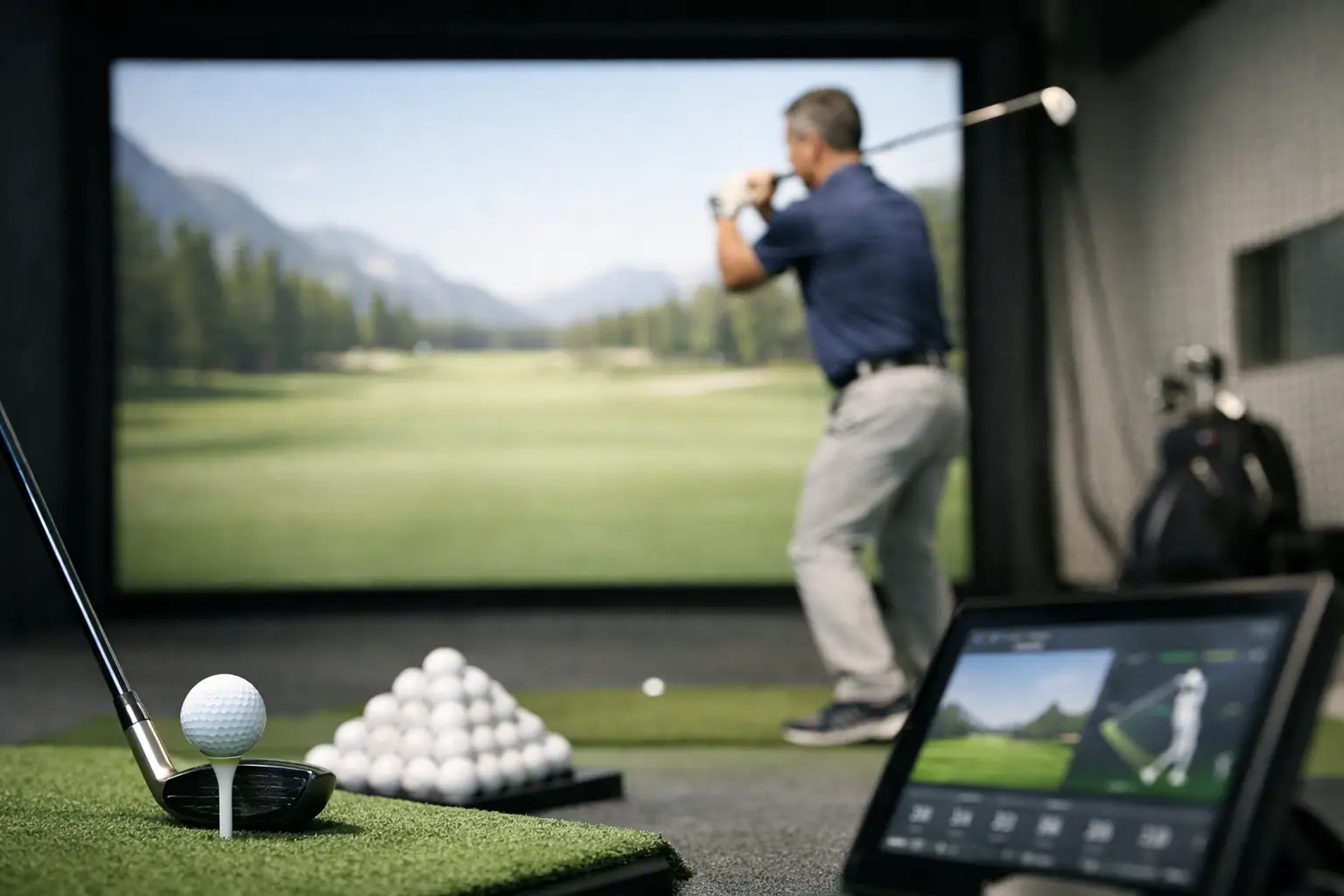
A lot of golfers think inconsistency starts on the course. One hole feels great, the next feels foreign, and the scorecard reflects it. In reality, the problem usually starts before the round ever begins. If your practice is irregular, rushed, or built around guesswork, your swing never gets a fair chance to stabilize. That is exactly how indoor golf improves consistency – it gives you a controlled setting where quality reps, accurate feedback, and realistic practice can happen on demand.
For players who want to get better, that matters more than most training aids ever will. Consistency is not just about swinging the same way twice. It is about building dependable patterns under repeatable conditions, then pressure-testing those patterns until they hold up.
Why consistency is hard to build outdoors
Traditional range practice has limits. Balls vary, turf varies, weather changes, and time pressure creeps in fast. Even a productive session can be interrupted by wind, heat, poor lighting, or a mat that tells you very little about the quality of strike.
That does not mean outdoor practice is bad. It means it is not always ideal for isolating variables. When you are trying to understand whether a pull came from club path, face angle, strike location, or tempo, too many changing conditions can blur the answer.
Indoor golf removes much of that noise. The environment stays stable, the technology captures what happened, and you can compare one swing to the next without wondering what the weather or range setup changed for you.
How indoor golf improves consistency through repetition
The biggest advantage of indoor practice is simple. It makes good repetition easier.
Consistency comes from doing the right things often enough that your body starts recognizing them as normal. That is difficult when practice depends on daylight, weather, and available tee times. Indoor golf shortens the gap between intention and action. If you can practice more often and with less friction, you are more likely to create momentum.
That matters for every type of player. Beginners need repetition to establish basic movement patterns. Mid-handicappers need it to reduce big misses. Better players need it to sharpen control over distance, curve, and contact. In each case, the goal is the same – fewer random outcomes.
More importantly, indoor practice can be focused repetition rather than empty volume. Hitting 80 balls without a purpose rarely builds consistency. Hitting 30 shots while tracking carry distance, launch, face contact, and dispersion can.
Better reps beat more reps
A quality practice session gives you a target, a measurable result, and a reason for any adjustment. That is where simulator-based training becomes especially useful. Instead of relying on feel alone, you can connect feel to fact.
If a 7-iron feels solid but launches too low and leaks right, the feedback tells you the swing was not as efficient as it felt. If a driver swing feels awkward but produces centered contact and tighter dispersion, that is useful too. Over time, that process cleans up false positives and false negatives. You stop guessing what works.
Feedback is what turns practice into improvement
Most golfers struggle with consistency because they are solving the wrong problem. They react to ball flight without understanding the mechanics behind it. The result is constant tinkering.
Indoor golf changes that by making feedback immediate and specific. Advanced simulator systems can show launch conditions, ball speed, club delivery, spin, and shot shape in seconds. High-speed impact cameras add another layer by revealing strike location and turf interaction. That level of detail helps golfers identify patterns instead of treating every miss like a mystery.
This is one reason premium indoor environments stand apart from basic simulator entertainment. The technology is not there just to make the screen look good. It is there to support better decisions.
At a facility built around performance tools like Golfzon’s TwoVisionNX, moving swing plates, 400 FPS impact cameras, and multi-surface hitting mats, golfers can train with feedback that reflects real swing behavior instead of simplified approximations. That is a major difference if your goal is lasting improvement.
Realistic conditions make consistency more transferable
One fair criticism of indoor practice is that not every simulator setup feels like the course. That criticism is fair – if the environment is too flat, too forgiving, or too entertainment-focused, improvement may not transfer as well.
But high-end indoor golf can solve that. Realism matters because consistency is not only about perfect lies and stock swings. It is about being able to produce solid shots from uneven stances, awkward lies, and changing shot requirements.
Why lie variation matters
A moving swing plate changes the training equation. When the ground adjusts to simulate uphill, downhill, and sidehill lies, you are not just grooving one motion from one position. You are learning how balance, posture, and strike change with the lie.
That creates a more complete version of consistency. Instead of being consistent only on flat ground, you start becoming more predictable across the kinds of situations that actually affect scoring.
Multi-surface hitting mats add another layer. Rough, fairway, and bunker conditions require different expectations and different technique. Practicing those transitions indoors helps golfers build adaptability without losing structure.
Indoor golf supports smarter practice, not just more practice
Convenience is often dismissed as a luxury. For golfers, it is a performance advantage.
When practice is easy to access, people practice with more intention and less compromise. You are not waiting for weather to cooperate or trying to squeeze a rushed bucket into the end of the day. You can show up, hit purposeful shots, review the data, and leave with a clear sense of progress.
That kind of efficiency is valuable for busy adults, competitive amateurs, and juniors balancing school, work, and family schedules. It is also one of the clearest answers to how indoor golf improves consistency over time. Better habits are easier to keep when the environment supports them.
Structured sessions are especially effective. Instead of mindlessly cycling through clubs, a golfer can work through wedge distance control, driver dispersion, approach shot windows, or pressure-based games. The session becomes targeted. The improvement becomes measurable.
Coaching becomes more precise indoors
Instruction is often more productive in an indoor setting because both player and coach can see the same evidence. A lesson no longer depends entirely on memory, ball flight, or one verbal cue that may or may not stick.
With accurate simulator data and visual swing feedback, coaches can isolate the priority issue faster. That shortens the trial-and-error phase that frustrates many students. It also helps prevent overcorrection, which is one of the fastest ways to lose consistency.
For juniors, this can be especially valuable. Younger players benefit from clear benchmarks and visible progress. For adults, it tends to reduce wasted practice time. In both cases, the combination of coaching and technology creates a tighter development loop.
There is a trade-off, though. Some golfers become too dependent on numbers and start chasing perfect metrics instead of functional ball flight. Good coaching keeps the focus where it belongs – on repeatable performance, not vanity data.
Consistency is mental too
Golfers often talk about mechanics when they mean confidence. The two are connected.
When you practice in a controlled environment and see proof of progress, trust starts to build. You know your carry numbers. You know your common miss. You know what a centered strike looks and feels like. That familiarity reduces doubt.
Indoor golf also creates low-friction opportunities to rehearse pressure. League play, simulator rounds, skills challenges, and competitive sessions can all sharpen decision-making without requiring a full day on the course. That matters because consistency is not just repeating your best swing. It is producing a playable shot when the moment feels uncomfortable.
For many golfers, that blend of training and competition is where the biggest gains happen. Practice builds the pattern. Play reveals whether it holds up.
Who benefits most from indoor golf?
Almost every golfer can benefit, but the reasons differ.
Beginners gain faster feedback and a less intimidating place to learn. Recreational players get more efficient practice and more dependable contact. Competitive players gain data, realism, and structured repetition that can tighten dispersion and distance control. Juniors benefit from consistency in scheduling and coaching. Even social golfers tend to improve because they simply play and practice more often.
The only real qualifier is intent. If you want indoor golf to improve consistency, your sessions still need purpose. Technology helps, but it does not replace discipline. The players who improve fastest are usually the ones who show up with a plan.
That is why a premium facility matters. A well-designed indoor environment should do more than entertain. It should make serious improvement more practical, more measurable, and more engaging. In the Phoenix metro area, that kind of setup gives golfers a reliable way to train year-round without sacrificing realism.
Consistency rarely arrives all at once. It shows up in smaller patterns first – tighter start lines, fewer heavy shots, more reliable carry numbers, calmer decisions. Indoor golf gives those patterns room to stick, and once they do, the game starts to feel a lot less random.
Sources and further reading
- Motor learning in golf: a systematic review PubMed
- Feedback for promoting motor-skill learning: a meta-analysis PubMed
- The golf simulator market: trends and insights National Golf Foundation