Golf Entertainment vs Performance Training
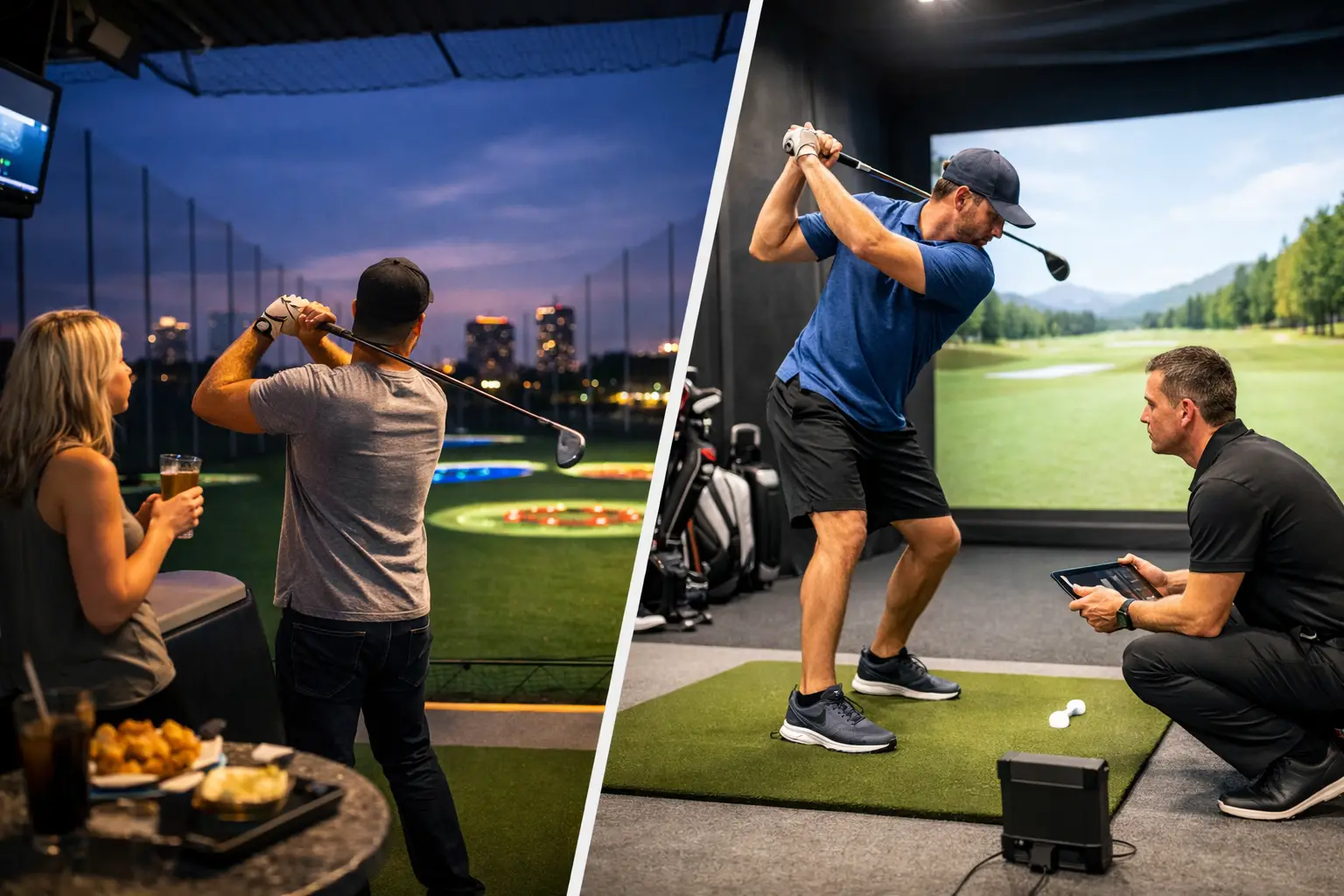
A golf simulator can be the setting for a relaxed night with friends or the most efficient practice session of your week. The difference is not simply the screen, the food, or the scorecard. In the conversation around golf entertainment vs performance training, the real question is whether the experience gives you dependable information and realistic conditions that can improve your next round.
For golfers in the Phoenix metro area, that distinction matters. A quick nine holes indoors can be a welcome escape from summer heat, a productive lunch-break session, or a competitive league night. But if the technology cannot accurately read the shot, reproduce meaningful lies, or show why a ball behaved the way it did, it has limits as a training tool.
Entertainment Is About Access, Energy, and Connection
Entertainment-focused golf venues are built to make the game approachable. They lower the barrier for someone who has never held a club, give casual players a social activity beyond a standard bar or restaurant, and make it easy for groups with mixed experience levels to have a good time.
That has real value. Golf can feel intimidating when the first experience involves keeping pace on a crowded course, finding balls in the desert, and navigating unfamiliar rules. A casual simulator environment gives new players room to swing, laugh at a mishit, and enjoy the game without that pressure.
For corporate outings, birthdays, and friend groups, the priorities are usually pace, atmosphere, and inclusivity. People want a format that keeps everyone involved, even if one guest is a low-handicap player and another has never made contact with a golf ball. Simplified games, target challenges, and familiar food-and-beverage settings make that easy.
The trade-off is that entertainment alone does not always transfer to the course. A fun game can build interest and confidence, but it may not tell a golfer whether their launch, face angle, strike location, spin, or distance control is improving. It can create a memorable night without necessarily creating a more reliable swing.
Performance Training Starts With Trustworthy Feedback
Performance training has a different purpose. It is designed around the golfer who wants to understand a shot, make an adjustment, and test whether that adjustment worked. The experience must be engaging, but it also needs to be credible.
That begins with accurate ball and club feedback. Distance numbers matter, yet they are only part of the picture. A player who hits a 7-iron 165 yards needs to know whether that carry came from centered contact, a favorable launch window, excess spin, a closed face, or a pull that happened to finish near the target.
High-speed impact cameras and detailed shot data help replace guesswork with evidence. They allow a golfer and instructor to identify patterns that can be difficult to see in real time. Was contact low on the face? Is the club arriving too steeply? Is the ball starting left because of clubface control, swing path, or both? Clear feedback gives practice a direction.
The same principle applies to short game and putting. Better golf is often decided by shots that do not require full speed. Productive training should let players work on carry distance, launch, rollout, slope awareness, and repeatable setup – not only compete for the longest drive.
Realistic Conditions Change the Quality of Practice
Flat mats are convenient, but golf is rarely played from a perfectly flat lie. A ball above your feet, below your feet, on an upslope, or on a downslope asks for different balance, alignment, and delivery. When every shot is struck from the same surface, a player can develop a practice swing that does not fully prepare them for the course.
Advanced systems such as Golfzon TwoVisionNX bring more of those variables indoors. Moving swing plates adjust to recreate uphill, downhill, and sidehill lies, while multi-surface hitting mats add another layer of realism. That does not replace playing outside, where wind, uneven ground, and course management still test every golfer. It does make indoor practice far more relevant to real golf.
Auto-tee functionality also matters more than it may seem. By keeping the session moving, it gives players more quality repetitions in less time. A golfer can spend an hour deliberately working through a club, a target, and a specific shot shape instead of repeatedly stopping to reset the station.
Golf Entertainment vs Performance Training: The Key Differences
The strongest distinction is intent. Entertainment asks, “Will this be fun for the group?” Performance training asks, “What will this session help me do better?” A premium golf facility can answer both questions, but it should not confuse them.
Entertainment emphasizes social play, fast formats, broad appeal, and low pressure. Performance training emphasizes precise feedback, realistic ball behavior, repeatable conditions, coaching, and a purposeful plan. One is not inherently better than the other. They serve different moments in a golfer’s life.
A beginner may initially benefit most from the social side of golf. Comfort and enjoyment are what bring someone back. Once that player wants to make more consistent contact, carry a bunker, or stop losing distance with their irons, training becomes more valuable.
An experienced player may take the opposite path. They might arrive for a focused gapping session or lesson, then stay for a league match because competition makes practice more enjoyable. The best facilities support that progression instead of forcing guests to choose between serious golf and a great night out.
When Entertainment Becomes Productive Practice
The line between fun and improvement is not fixed. A competitive simulator league can sharpen course strategy, create pressure, and expose weaknesses that a standard range session might hide. Playing a virtual round forces decisions: lay up or attack, hit a high shot or keep the ball under trouble, play safely to the center or challenge a difficult pin.
That is particularly useful for golfers who struggle to take range success onto the course. Beating balls with one club can build a pattern, but simulated course play requires changing targets, clubs, and trajectories. It creates a more complete practice environment while preserving the competitive energy that makes golf enjoyable.
Tournaments and structured games can also motivate players who do not enjoy isolated drills. A score gives the session stakes. The important point is that the simulator must accurately reward a well-struck shot and reveal a poor one. Otherwise, players may be competing without receiving useful feedback.
How to Choose the Right Experience for Your Goal
Before booking an indoor golf session, start with what you want from the hour. If you are organizing a work event, introducing friends to golf, or looking for a relaxed social activity, entertainment features should lead the decision. Look for a polished space, intuitive game options, and an experience that welcomes every skill level.
If you are preparing for a tournament, rebuilding confidence with a club, dialing in distances, or helping a junior develop sound fundamentals, prioritize performance technology and instruction. Ask whether the simulator reads more than total distance, whether it provides visual impact feedback, and whether the hitting surface replicates changing lies.
Coaching is another dividing line. Data is only valuable when a golfer knows how to interpret it. A PGA professional can connect the numbers to a movement pattern, a practice drill, and a clear next step. That prevents players from chasing a single metric or making random changes from one swing to the next.
For many golfers, the right answer is a combination. Use a focused session to understand your game, then put those skills under pressure in league play or a virtual round. Bring a friend who is new to the game, but give them an experience realistic enough that their first solid shot feels like real golf.
At 24 Precision Golf, that balance is built around immersive Golfzon technology, professional instruction, and programming that gives every player a place to improve and compete. A rainy day, a 110-degree afternoon, or a packed schedule no longer has to interrupt progress.
The next time you step into a simulator bay, decide what success looks like before you swing. If the goal is a memorable night, enjoy the competition. If the goal is a better score outside, choose the feedback, realism, and coaching that make every shot count.
Sources and further reading
- The golf simulator market: trends and insights National Golf Foundation
- Motor learning in golf: a systematic review PubMed
- GOLFZON simulator technology GOLFZON