How to Improve Ball Striking Indoors With Data
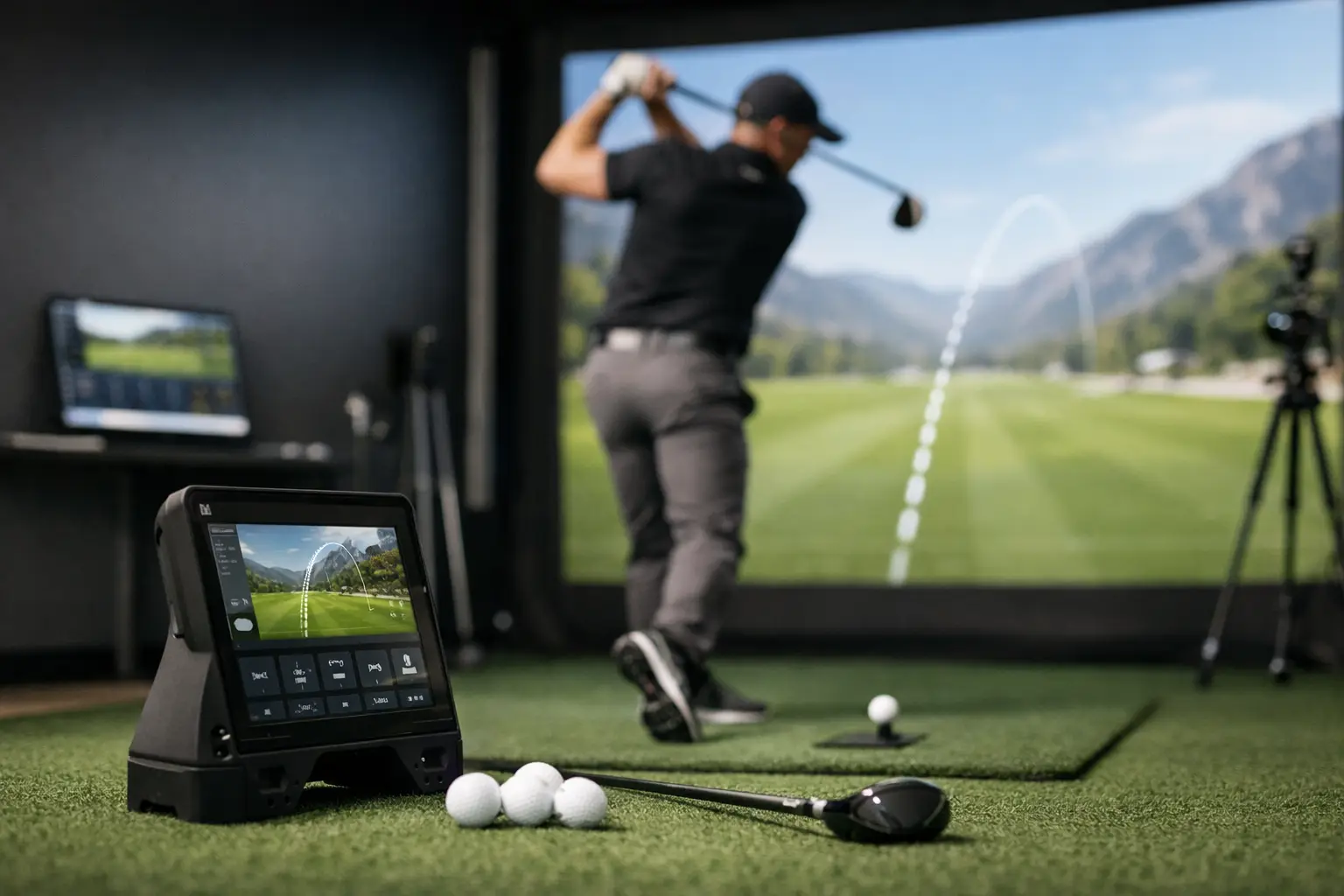
A flushed 7-iron feels the same whether it happens on a grass range or under the lights. The difference indoors is that every strike can leave a trail of useful evidence. Learning how to improve ball striking indoors means using that evidence to identify the real cause of inconsistent contact, then repeating a better pattern with purpose.
For golfers in the Phoenix metro area, indoor practice also removes the usual reasons a session gets skipped: extreme heat, fading daylight, wind, and a crowded range. But the value is bigger than convenience. A high-quality simulator environment gives you a controlled place to measure strike quality, test changes, and build trust in your swing.
Start With Contact, Not a Swing Thought
Ball striking is often described as a swing issue, but the first question is simpler: where is the club contacting the ball and the ground? A shot can look reasonably straight while still being struck low on the face, toward the toe, or with poor low-point control. Those misses cost distance, launch consistency, and the ability to control trajectory.
Before changing your grip, backswing, or release, establish a contact baseline. Hit 10 shots with one mid-iron at a comfortable pace. Do not chase a perfect number. Look for patterns in strike location, carry distance, launch, spin, and start direction. If six shots are low on the face and finish short, that is a more useful finding than simply deciding you need to “swing better.”
Indoor simulators are especially effective here because the environment stays consistent. The same ball, hitting surface, lighting, and target let you compare one swing to the next without guessing whether a gust of wind or a worn patch of turf changed the result.
Use Simulator Data to Improve Ball Striking Indoors
Data is valuable only when it answers a specific question. Watching five numbers after every shot can make practice feel technical without making it productive. Start with the measurements most connected to your current miss.
For thin or heavy iron contact, watch launch, spin, carry distance, and the gap between your good and poor shots. Thin shots often launch higher with less spin and lose predictable carry. Heavy shots may launch lower, come up short, and produce an obvious drop in ball speed. A cluster of similar numbers is usually a better sign of improvement than one unusually long shot.
For shots that miss left or right, begin with club path, face angle, and start direction. The ball usually starts close to where the face points at impact. Path helps explain curve. If your shots begin right and fade farther right, a face that is open relative to the target is likely the priority. Trying to fix it by dramatically changing path may create a second problem.
At 24 Precision Golf, high-speed impact cameras can add the visual proof that numbers alone cannot provide. Seeing face contact makes it easier to connect a heel strike or toe strike to what the simulator is reporting. That feedback loop is where indoor practice becomes far more deliberate than simply hitting a bucket of balls.
Choose One Metric for Each Practice Block
A 45-minute session does not need 45 minutes of analysis. Divide it into short blocks with a single job. You might spend 10 minutes improving centered contact with an 8-iron, then 10 minutes controlling carry distance with a wedge, and finish with a few target-based shots that require you to perform rather than rehearse.
One metric keeps your attention in the right place. If your priority is strike quality, do not abandon it because one shot curves slightly. If your priority is start line, do not rebuild your swing after a single thin strike. Good practice separates the signal from the noise.
Train Low Point With Simple, Repeatable Drills
For irons, reliable ball striking depends heavily on controlling the bottom of the swing. The club should contact the ball first, then continue into the turf or mat. Indoor mats will not give exactly the same feedback as natural grass, so use both the simulator data and a defined practice task to keep yourself honest.
Place an alignment stick or a strip of tape on the mat a few inches behind the ball. Make practice swings without touching the marker, then hit shots with the same intention. Contacting the marker first suggests that your low point is too far behind the ball. Start with slow, balanced swings. Speed can wait until the motion is repeatable.
Another productive drill is the trail-foot-back drill. Pull your trail foot back a few inches and hit controlled half shots. This setup can help some golfers shift pressure forward and strike the ball before the ground. It is not a permanent stance, and it will not solve every contact issue, but it can be an effective feel for players who hang back through impact.
For golfers who tend to scoop or flip at the ball, try three-quarter shots with a short iron while focusing on a quiet finish and a low, forward strike. The goal is not to force the handle forward aggressively. It is to let the body keep moving while the clubhead reaches the ball with enough shaft lean and speed to compress it.
Make the Mat Work for You
A quality hitting surface matters. Cheap, overly forgiving mats can hide a slightly heavy strike by letting the club bounce through impact. That may feel solid indoors but produce fat shots when you return to real turf. Multi-surface hitting mats are more useful because they create a more realistic response across different lies and encourage better delivery.
Still, every mat has limits. If you hit several shots that feel unusually good but have weak ball speed or inconsistent spin, trust the data over the sensation. Likewise, if a shot feels slightly heavy but produces a normal launch, spin, and carry window, avoid overreacting. The point is not to manufacture a perfect feeling. It is to develop a strike that performs predictably.
Moving swing plates add another layer of realism by changing the lie beneath your feet. Practice from an uphill, downhill, or sidehill position occasionally rather than spending every session on a perfectly level stance. Real courses rarely provide perfect lies, and learning to maintain balance while adapting your setup makes your ball striking more portable.
Practice at Speeds You Can Control
Many golfers arrive indoors determined to gain speed, then spend the entire session swinging at maximum effort. That approach can be useful in a dedicated speed-training plan, but it is rarely the fastest route to better contact.
Begin with a speed that allows you to finish in balance and identify where the club met the ball. Hit five shots at roughly 70 percent effort, then five at 80 percent. If centered contact, carry, and dispersion remain stable, add speed gradually. If contact disappears, you have found the point where your current movement loses control.
This progression builds an honest relationship with your swing. It also helps players who only strike the ball well when they “swing easy.” The answer is not necessarily to stay slow forever. It is to earn speed by maintaining the impact conditions that produced the good shot.
Turn Practice Into On-Course Skill
A simulator session should include technical work, but it should not end there. Golf is played one shot at a time, with different clubs, targets, and consequences. Finish practice with a performance challenge that asks you to use your improved strike under a little pressure.
Choose five approach shots with changing yardages. Go through your full pre-shot routine, pick a precise target, and use only one ball for each attempt. Record whether you achieved the carry window and start line you intended. A missed target is not a failure if it reveals a pattern. It is a better teacher than hitting the same 7-iron 30 times without a decision to make.
You can also play several holes on a simulated course, but keep the purpose clear. Use the round to test club selection, uneven lies, and commitment. Do not turn every bad shot into a technical diagnosis. Save detailed adjustments for the next practice block.
Know When Coaching Beats More Repetition
Repetition is powerful when you are repeating the right task. When a miss persists despite focused practice, professional instruction can shorten the process dramatically. A PGA professional can connect impact data, camera footage, setup, and movement patterns into a clear plan instead of offering a generic swing tip.
This is especially valuable for golfers whose symptoms conflict. For example, a player may hit occasional fat shots but also strike the toe, lose posture, and fight a slice. Treating each symptom independently can create confusion. An experienced coach can identify the priority change and provide a drill that fits the golfer rather than a one-size-fits-all fix.
Better ball striking is not built by chasing a single perfect swing on a perfect day. It comes from seeing your patterns clearly, practicing with a defined purpose, and taking that confidence to the next shot that matters.