Golf Simulator Phoenix for Better Golf Year-Round
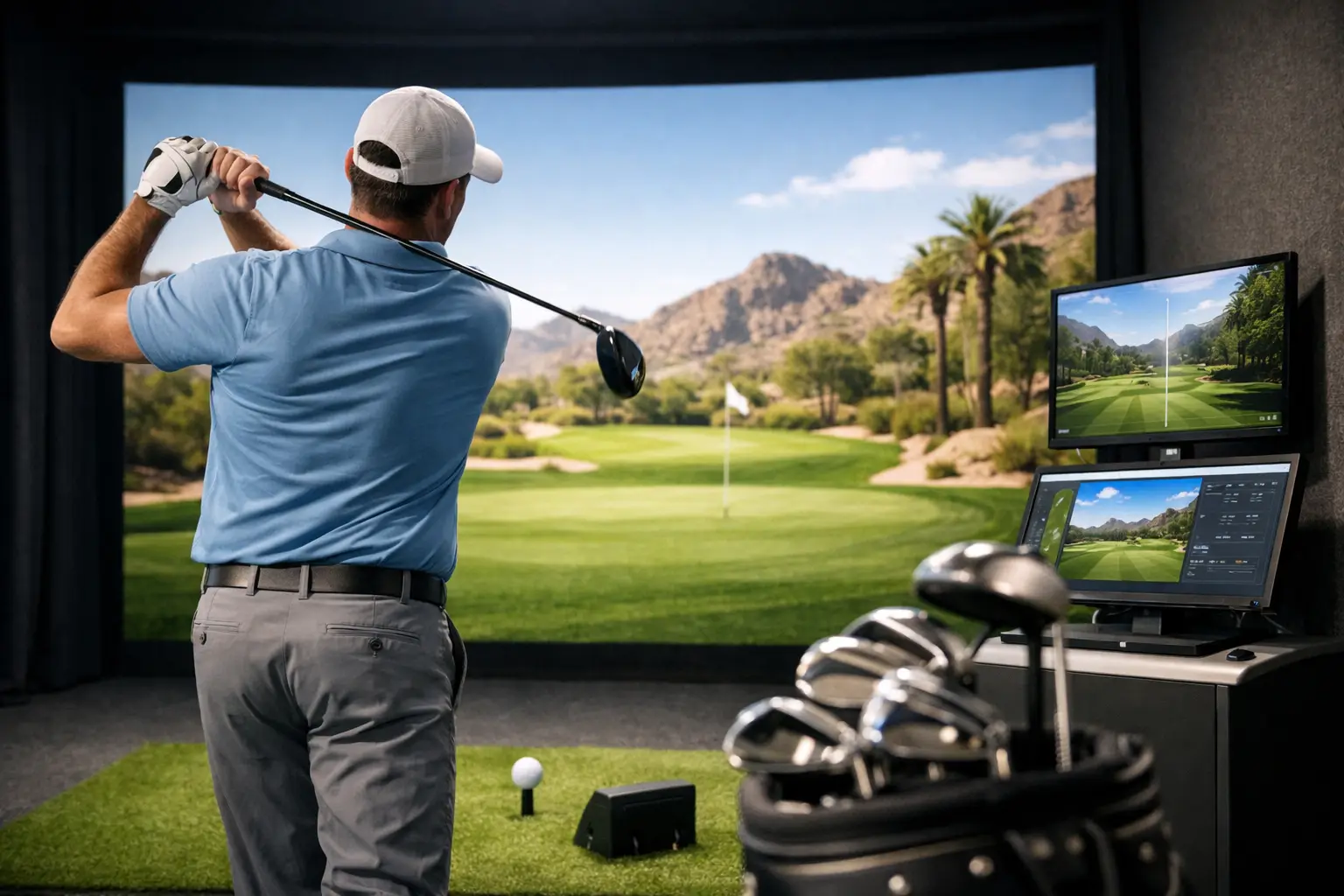
A 2:15 p.m. tee time in Phoenix can mean heat, pace-of-play delays, and a full afternoon commitment. A premium golf simulator Phoenix golfers can rely on changes that equation. It gives players a climate-controlled place to work on their game, play memorable courses, compete with friends, and get meaningful feedback without waiting for perfect conditions.
The difference is not simply hitting balls into a screen. The best indoor golf experiences recreate the decisions golfers face on the course: choosing a club, adjusting for a lie, reading shot shape, managing distance, and responding to accurate ball-flight data. For a player who wants more from an hour of practice – or a group that wants a more elevated way to spend an evening – the technology and the environment matter.
What a Golf Simulator Phoenix Facility Should Deliver
Not every simulator experience is built for the same purpose. Some venues are designed primarily for casual entertainment, which can be a great fit for a quick social outing. But golfers focused on improvement, realistic play, or productive practice should look beyond the biggest screen or the longest course list.
A performance-driven simulator should provide dependable measurements for ball speed, launch, spin, carry distance, direction, and total distance. Those numbers give a player something actionable. If a seven iron is carrying short, spinning too much, or starting right of target, the goal is to understand why and make an informed adjustment rather than guess between shots.
Realism also depends on what happens underneath the player. Advanced systems such as Golfzon TwoVisionNX use moving swing plates and multi-surface hitting mats to create more realistic uphill, downhill, sidehill, fairway, rough, and bunker conditions. That changes the shot from a repeated range swing into a golf shot with a lie to solve. It is especially valuable for experienced players who want their indoor work to transfer more naturally to the course.
High-speed impact cameras add another layer of useful detail. With 400 FPS camera technology, golfers can see more clearly how the club meets the ball and connect what they feel in the swing with what actually occurred at impact. Auto-tee functionality keeps practice moving, too. Less time resetting balls means more quality repetitions in a 60-minute session.
Practice With a Purpose, Not Just a Bucket of Balls
Indoor golf is at its best when it makes practice more efficient. A driving range can be useful, but it often leaves golfers estimating carry distances, relying on imperfect range balls, and hitting the same club from the same flat lie. A simulator lets practice become more specific.
A player preparing for an upcoming round might spend a session dialing in wedge carries from 60 to 120 yards, then test driver dispersion against a virtual fairway. Someone working through a recurring miss can use impact and ball-flight feedback to identify whether the issue is strike location, face angle, launch, or a delivery pattern. The data does not replace quality instruction, but it makes a lesson far more productive because the coach and player can see what the ball is doing shot after shot.
It also helps to set a narrow goal before starting. A productive session may focus on consistent center contact with mid-irons, a reliable stock shot with the driver, or better distance control with scoring clubs. Chasing a personal-best ball speed number can be fun, but it is not always the same as building a shot that holds up on the course.
For beginners, the controlled setting removes some of the intimidation of a busy range or a crowded first tee. There is room to learn the fundamentals, understand the purpose of each club, and build confidence at a comfortable pace. For skilled players, the same technology can support more demanding work around dispersion patterns, launch windows, and course-management decisions.
Play Courses When the Desert Course Is Not the Best Option
Phoenix golf offers exceptional outdoor courses, but year-round access does not always mean every day is equally enjoyable. Summer heat, monsoon weather, limited daylight, and packed weekend tee sheets can make a traditional round difficult to schedule. An indoor simulator gives golfers a way to keep playing when an outdoor round is inconvenient.
Course simulation is more engaging than a standard hitting-bay session because every shot has context. A tee shot needs to find a fairway. An approach must carry a bunker. A recovery shot calls for restraint instead of brute force. Those decisions make a round with friends feel competitive while giving golfers a chance to practice skills that matter outdoors.
That said, simulator golf is not a complete replacement for walking a course, feeling the wind, judging natural turf, or reading a live green. It is a different format with distinct advantages. The most useful approach is to treat it as a high-quality complement to outdoor golf: a way to play more often, practice more intentionally, and stay sharp between rounds.
Instruction That Turns Feedback Into Progress
Numbers alone do not fix a golf swing. In fact, too much data without a clear plan can make golfers chase symptoms. The strongest learning environment combines accurate technology with PGA professional instruction that translates feedback into a small number of practical priorities.
A coach can use simulator results to establish a baseline, identify the ball-flight pattern that is costing the player shots, and build a practice plan that fits the golfer’s goals. For one player, that may mean creating a more predictable start line. For another, it may mean improving low-point control with wedges or learning to manage a fade rather than trying to eliminate it.
This approach is especially valuable for golfers with limited time. Instead of spending weeks wondering whether a swing change is working, a player can measure the result in a structured lesson and return to the simulator with a focused plan. Improvement still requires repetition and patience, but the path becomes clearer.
Junior golfers benefit from the same structure. A well-designed junior program should balance athletic development, sound fundamentals, confidence, and enjoyment. The goal is not to overload a young player with technical terminology. It is to create an organized path where skills develop alongside a genuine interest in the game.
A Better Setting for Leagues, Tournaments, and Events
Golf has always been social, and simulator golf makes that social side easier to schedule. A league can run on a consistent timetable without weather cancellations. A tournament can move at a controlled pace. A group can enjoy real competition without committing five or six hours to an outdoor round.
The experience works because it can meet different players where they are. Serious golfers can compete over score and strategy, while newer players can participate without the pressure of a difficult course or a crowded tee box. Formats can be tailored to the group, whether that means individual stroke play, team competition, closest-to-the-pin contests, or a relaxed round built around food, conversation, and a few memorable shots.
For corporate groups, client outings, and celebrations, the facility should feel polished enough for hosting while remaining approachable for non-golfers. Technology creates the shared activity, but the best events leave room for connection. A guest who has never held a club should be able to enjoy the experience, while the low-handicap golfer should still have a reason to take each shot seriously.
Choosing the Right Indoor Golf Experience
The right choice depends on what you want from the session. If the priority is a casual hour with friends, convenience, a welcoming atmosphere, and course play may be enough. If the priority is better golf, look for accurate ball-flight feedback, realistic lie conditions, high-quality hitting surfaces, and access to instruction.
Consider how you plan to use the facility over time. Occasional players may prefer hourly bookings for a round or a targeted practice session. Frequent players often get more value and consistency from memberships, recurring league nights, or scheduled lessons. The best routine is the one you will actually maintain, whether that is a weekly skills session, a monthly competitive round, or a short-game-focused visit before a weekend tee time.
At 24 Precision Golf, the emphasis is on making indoor golf feel purposeful as well as enjoyable. Advanced Golfzon technology, professional coaching, structured programming, and an elevated setting create a place where a golfer can train seriously one day and bring a group back for competition the next.
Your next productive round does not have to wait for cooler weather, an open tee sheet, or an entire afternoon. Choose a session with a clear goal, bring the clubs you trust, and let every shot give you a reason to come back better.
Sources and further reading
- Heat and athletes Centers for Disease Control and Prevention
- The golf simulator market: trends and insights National Golf Foundation
- Technology at 24 Precision Golf 24 Precision Golf