Simulator Practice vs Course Practice Explained
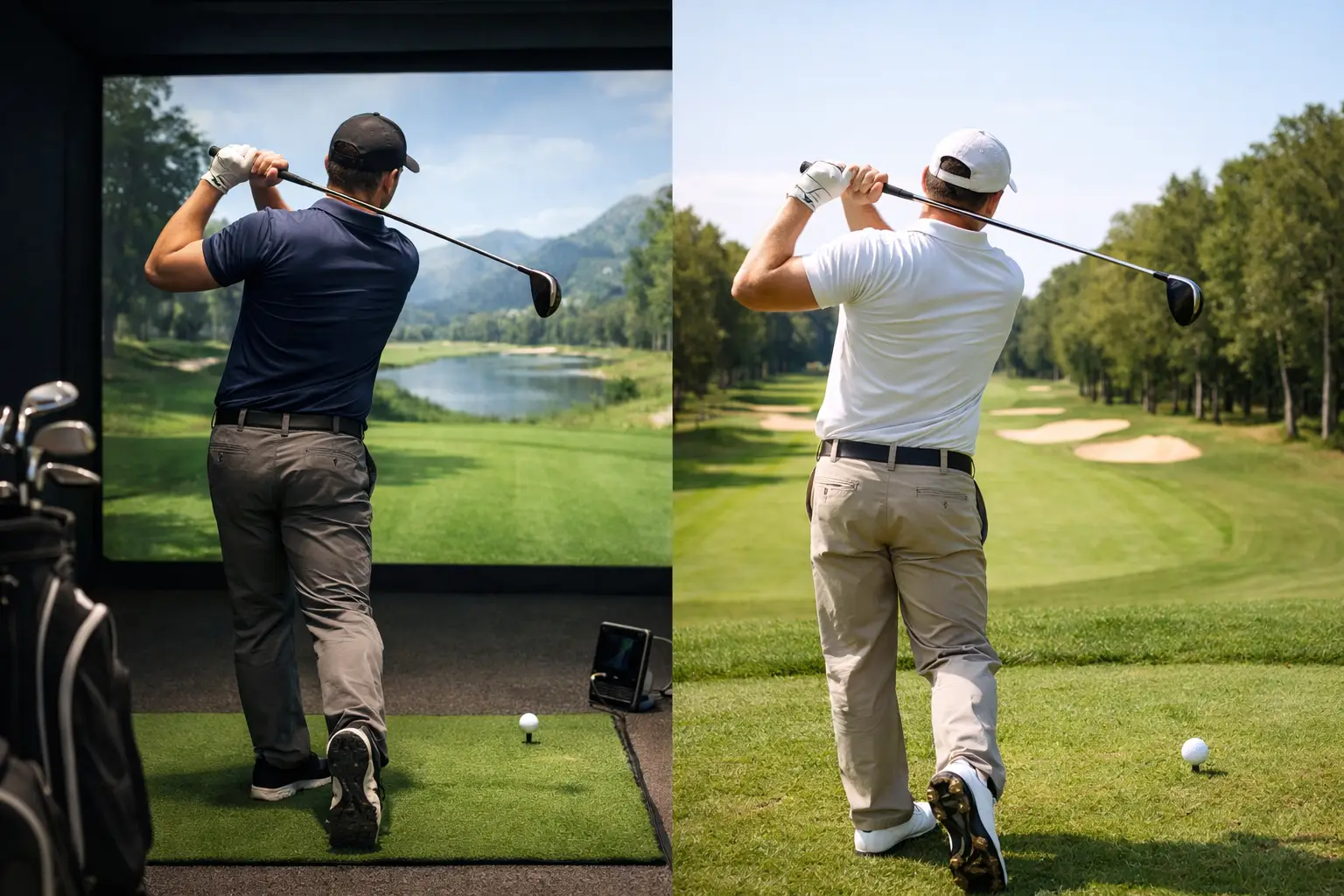
A 45-minute practice window can either produce dozens of measured swings or disappear after a few holes, a lost ball, and a wait on the tee. That is why simulator practice vs course practice is not a debate with one winner. Each setting develops a different part of your game, and the fastest path to better golf is knowing exactly what each one can teach you.
For players who want more consistency, the simulator is a high-efficiency training environment. For players preparing to score on a real course, the course remains the final test of strategy, execution, and composure. Use both with intention, and your practice starts to carry over when the score matters.
Simulator Practice vs Course Practice: Different Tests
A simulator gives you repeatable conditions. You can hit the same club from the same surface, aim at the same target, and see the result of each shot without guessing. That consistency is valuable because it removes many variables that make it difficult to identify what is actually happening in your swing.
Course practice introduces the variables golf was built around. The ball may sit down in bermuda, perch above your feet, catch a downslope, or leave you between clubs with water short and trouble long. Wind, uneven stances, visual pressure, pace of play, and course management all influence the shot.
Neither environment is more “real” in every respect. A premium simulator is exceptionally effective at measuring ball flight, club delivery, and strike patterns. A golf course is unmatched for teaching how to make decisions and produce a shot when the lie is imperfect. The question is not which one replaces the other. It is which one is most useful for the skill you need to build today.
What Simulator Practice Does Better
The greatest advantage of simulator practice is feedback. A well-struck 7-iron that flies 165 yards may feel good, but feel alone does not tell you whether it launched too high, spun too much, started offline, or carried farther than expected. Accurate launch data turns a vague impression into something you can evaluate.
At 24 Precision Golf, Golfzon TwoVisionNX technology provides a detailed look at each shot while keeping practice fast and engaging. High-speed impact cameras, moving swing plates, auto-tee functionality, and multi-surface hitting mats create a more complete training experience than simply hitting balls into a screen. You can see what the ball did, understand how it reacted at impact, and return to the next swing without losing momentum.
That makes the simulator especially effective for dialing in carry distances. Many golfers know their best-ever number with a club but not their reliable carry number. Those are not the same thing. When you practice indoors, you can hit enough shots to identify realistic averages, spot distance gaps at the top and bottom of the bag, and learn which club covers a specific yardage under normal conditions.
Simulators also make technical practice more productive. If you are working with a PGA professional on face control, path, low-point control, or strike location, immediate shot feedback helps connect a swing change to an outcome. Instead of wondering whether a change worked, you can watch the ball flight and data respond shot by shot.
The controlled setting is equally useful for pressure practice. Create a nine-shot challenge with one target, one club, and a clear scoring standard. Play a virtual hole where every tee shot must finish on the correct side of the fairway. Hit approach shots to a specific carry number rather than casually swinging until one looks good. The simulator gives structure to practice, which is where many players make the biggest gains.
Repeatability creates faster learning
On a course, you might hit one 150-yard approach in an entire round. In a simulator session, you can hit 10 purposeful shots to a 150-yard target, review the pattern, make an adjustment, and test it again. That repetition matters when the goal is to improve a specific skill.
It also makes practice practical in the Phoenix metro area. Extreme heat, monsoon weather, limited daylight, and busy schedules do not have to interrupt your training. An indoor session lets you work on your game year-round without spending the first hour just getting to the first tee.
What Course Practice Does Better
Data can tell you a lot, but it cannot fully reproduce the consequences of a poor decision. The golf course teaches you to assess a lie, choose a target, manage risk, and accept that a smart shot is not always the most aggressive one.
A simulator may replicate a downhill or sidehill lie through moving plates, which is a meaningful advantage for indoor training. But a real course still asks more of your eyes and instincts. You must judge how thick rough will affect the strike, whether a bunker lip allows enough loft, how firm the green is, and how a slope changes a putt’s pace. Those decisions are difficult to rehearse in a perfectly controlled setting.
Course practice also reveals whether you can take your range swing to the course. A player may produce excellent numbers when hitting several shots in a row, then struggle when one tee ball carries a penalty and the next shot must count. That is not a failure of the simulator. It is a signal that the player needs more on-course transfer practice.
The best course practice is rarely just playing another round on autopilot. Choose a purpose before you tee off. Play conservative targets for nine holes and track how often you avoid trouble. Practice different tee-shot shapes. Take extra time around the greens to evaluate landing areas and miss locations. If the course allows it, drop an extra ball from an awkward lie and learn what a realistic recovery shot looks like.
The Missing Link: Transfer Practice
Most golfers benefit most when simulator and course sessions connect. Start indoors by establishing a skill with repeatable feedback, then take that skill outside where the lie, visual environment, and consequences change.
For example, a player who tends to miss 8-irons right can use simulator data to understand whether the face is open, the path is moving too far left, or contact is shifting toward the heel. Once the player finds a reliable pattern, course practice can focus on selecting a target that accounts for the preferred miss and committing to the shot on one attempt.
The same approach works for distance control. Use indoor practice to build a carry-distance chart, then use course rounds to see how elevation, wind, firm turf, and pin placement affect club selection. Your numbers become the starting point, not an excuse to ignore what the course is telling you.
A smart weekly balance depends on your goal
If you are rebuilding a swing, preparing for a tournament, or trying to close a distance gap, more simulator time usually makes sense. You need repetitions, feedback, and a reliable way to measure progress. If you are about to play an unfamiliar course or your scores are rising because of penalties and poor decisions, prioritize on-course practice.
Beginners often benefit from starting indoors because the pace is relaxed and the feedback is clear. They can learn ball flight, develop contact, and build confidence without the pressure of holding up a group. As they improve, short on-course sessions and supervised play help them learn etiquette, strategy, and the realities of uneven lies.
Competitive players should use both settings consistently. The simulator is ideal for sharpening a shot pattern and validating carry numbers. The course is where those skills must survive fatigue, changing conditions, and tournament pressure. Recreational golfers can take the same approach on a smaller scale: one focused simulator session can make the next weekend round more enjoyable and more productive.
When You Should Choose One Over the Other
Choose simulator practice when you need measurable feedback, efficient repetitions, club gapping, swing work, or a weather-proof session that fits into a busy day. It is also an excellent choice when you want to play a round, compete in a league, or enjoy golf socially without committing four or five hours.
Choose course practice when you need to improve decision-making, prepare for a specific layout, learn to handle rough and uneven ground, or test whether your swing holds up with one ball and one chance. No technology can fully duplicate the feeling of standing over a shot with trouble in play and a number you have to trust.
The strongest golfers do not treat indoor and outdoor golf as competing experiences. They use precise simulator feedback to build a dependable game, then use the course to develop judgment. Book the setting that matches your next challenge, practice with a clear objective, and let every session earn its place in your game.
Sources and further reading
- Motor learning in golf: a systematic review PubMed
- The golf simulator market: trends and insights National Golf Foundation
- GOLFZON simulator technology GOLFZON