Data Driven Golf Coaching Trends to Watch
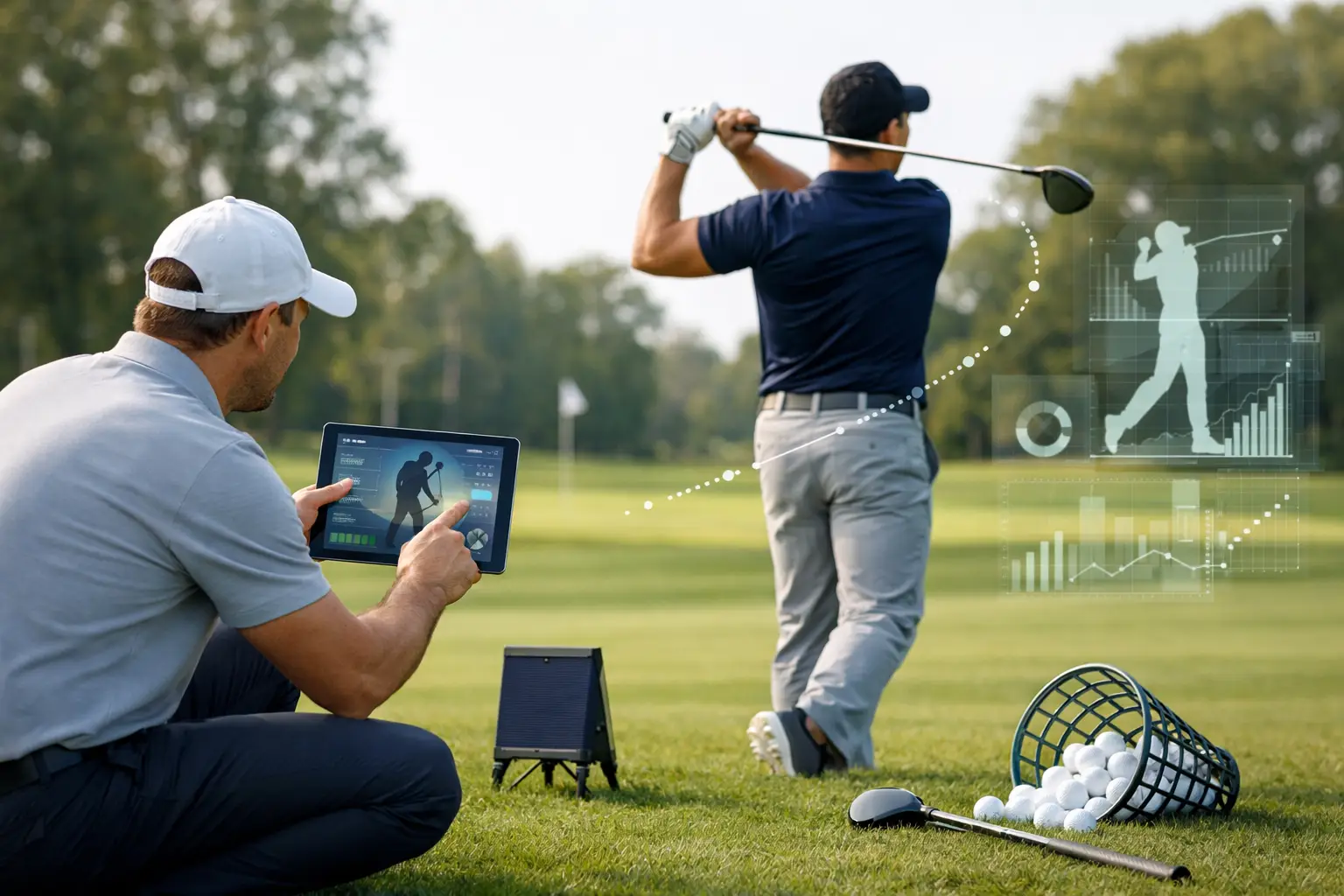
A 7-iron that starts on line but finishes 12 yards short tells a story. So does a driver that finds the center of the face in practice but leaks right on the course. The best data driven golf coaching trends are changing how that story gets read. Instead of guessing from one swing or relying on a vague feeling, golfers and coaches can identify what happened at impact, understand why it happened, and build a practice plan that has a purpose.
For serious players, that means less time chasing random tips and more time improving the shots that affect scoring. For beginners and juniors, it creates a clearer path forward: simple feedback, achievable goals, and evidence of progress. The technology is powerful, but the real value is not a screen full of numbers. It is a better coaching conversation.
Why Data Driven Golf Coaching Trends Matter
Golf has always been a game of feedback. A ball flight provides feedback. So does contact, turf interaction, and the result on a scorecard. The limitation is that those clues can be incomplete. A player may see a slice, for example, without knowing whether the primary cause is face angle, club path, strike location, or a combination of all three.
Modern launch monitors, simulator systems, high-speed cameras, and shot-tracking platforms bring those details into focus. They measure ball speed, launch angle, spin, carry distance, club delivery, dispersion, and strike patterns. Used well, that information turns a lesson from “try to swing more from the inside” into a specific adjustment tied to a measurable outcome.
That distinction matters because golf improvement is rarely linear. A swing change can initially affect contact before it improves direction. A player may add speed but lose control. Data helps coach and player decide whether a change is producing the right movement, the right ball flight, or neither. It also prevents the common mistake of abandoning a productive adjustment after one imperfect shot.
The Data That Actually Changes a Golf Swing
Not every number deserves equal attention. The most useful coaching metrics depend on the player, the club, and the goal of the session. A golfer preparing for a tournament may need tighter driver dispersion and better carry-distance control. A newer player may benefit more from consistent centered contact and a dependable launch window.
Ball flight is the starting point
Ball speed, launch, spin, peak height, carry, total distance, and offline result show what the shot did. These are the performance outcomes a player ultimately cares about. If a 6-iron is consistently launching too low with insufficient carry, the coach has a clear problem to investigate.
But ball flight alone does not explain the cause. The same low shot could come from a low-face strike, too little dynamic loft, an unsuitable shaft or ball, or a delivery pattern that needs attention. Good coaching does not stop at the result.
Club delivery and strike explain the result
Club path, face angle, angle of attack, dynamic loft, and impact location reveal how the ball was produced. High-speed impact video adds another valuable layer, showing precisely where the ball meets the face. This is where coaching becomes more efficient.
Consider the golfer whose driver misses right. If the face is open relative to the target but the path is neutral, the solution differs from a player whose path is sharply left. If impact is consistently toward the heel, gear effect may be contributing to the curve. Treating all right misses as the same swing fault wastes practice time.
Dispersion often matters more than a career-best number
Players naturally notice their longest drive or fastest ball speed. Those milestones are exciting, but repeatability wins more shots. A coach may be more interested in the width and shape of a player’s shot pattern than in one exceptional swing.
A useful practice session asks: Can the player carry a target distance within a reasonable range? Is the miss predictable? Does a swing change narrow dispersion over a series of shots? Performance data should reward consistency, not just highlight the occasional perfect strike.
From Measurement to a Better Practice Plan
The strongest coaching trend is not simply collecting more data. It is using a baseline, a decision, and a repeatable drill to create progress.
First, a coach establishes the player’s current pattern. That may include an average carry distance with each scoring club, a driver dispersion pattern, or the launch and spin characteristics of a wedge shot. The baseline should be measured over enough swings to reveal a pattern, not built around one shot the player loves or hates.
Next, the coach selects one priority. A player who is losing distance with irons may need to improve strike quality before trying to create more speed. Someone with inconsistent approach distances may need better low-point control and a more repeatable strike, not a complete swing rebuild. This is where experienced coaching protects golfers from chasing every metric at once.
Then comes the practice design. The golfer receives a feel, a drill, and a measurable target. For example, a player working on face control might hit short shots to a narrow virtual fairway, then progress to a full-speed driver pattern. Another player may use carry-distance targets to develop wedge control in five-yard increments. Each repetition has a job.
The final step is retesting. If the numbers move in the intended direction and the player can reproduce the result under a changing target or simulated course scenario, the improvement is becoming usable golf skill.
Simulator Data Adds the Missing Context
Range practice can be valuable, but it does not always show a complete picture. A premium simulator environment adds target lines, landing zones, virtual hazards, lie conditions, and immediate shot data. It lets golfers move from a technical drill to a decision-making shot without leaving the bay.
That is especially useful for players in the Phoenix metro area who want productive, weather-proof practice throughout the year. A player can test a draw against a fairway that narrows at 260 yards, practice a shot from an uphill lie, or compare the carry window needed to hold a firm green. The goal is not to make practice feel like a video game. It is to make feedback more relevant to real golf.
At 24 Precision Golf, Golfzon TwoVisionNX technology supports that experience with moving swing plates, multi-surface hitting mats, auto-tee functionality, and high-speed impact cameras that capture at up to 400 frames per second. Those features make it easier to connect technique to the conditions a golfer actually faces on the course. A shot from a sidehill lie should not be practiced as if every ball sits perfectly flat.
Data Driven Golf Coaching Trends for Every Skill Level
The next phase of data driven golf coaching trends is more individualized, not more complicated. Coaches are increasingly using data to create benchmarks based on a player’s game rather than comparing every golfer to a tour professional.
For a beginner, success may look like consistently getting the ball airborne, making centered contact, and building a reliable stock shot. For a competitive amateur, it may mean optimizing driver dispersion, dialing in approach distances, and reducing the gap between practice performance and on-course execution. For juniors, measured progress can make development more motivating while ensuring that fundamentals come before speed training.
Another major shift is the integration of technical coaching with course management. A player might have the ability to hit a high-spin wedge, but data can show whether that shot is the best choice from a particular distance and lie. Golfers are learning not only how to make a shot, but when to use it. That is a meaningful difference when the goal is lower scores.
Short-game data is also becoming more useful. Carry distance and rollout patterns help players understand why a chip finishes long or short. On virtual greens, golfers can practice landing spots and trajectory choices with clear feedback. Still, no simulator replaces the feel developed through real putting and varied turf conditions. The best programs use indoor precision to support, not replace, complete golf development.
What Data Cannot Tell You
Numbers are objective, but interpretation requires judgment. A launch monitor cannot fully measure confidence on the first tee, fatigue late in a round, a player’s injury history, or how well a swing change will hold up under pressure. It also cannot replace a coach who sees compensation patterns, listens to a player’s goals, and knows when to simplify.
There are trade-offs. Chasing ideal launch and spin can become counterproductive if it leads a player away from a repeatable motion. A golfer does not need tour-level speed or a textbook delivery pattern to play excellent golf. The right target is the one that improves that player’s consistency, enjoyment, and scoring potential.
The best lesson leaves a golfer with fewer thoughts, not more. Data should clarify the next move, whether that is a better setup, a more centered strike, or a smarter club selection. When technology, expert coaching, and purposeful practice work together, every session can create evidence that the game is moving in the right direction.