Indoor Golf Event Venue Review for Better Groups
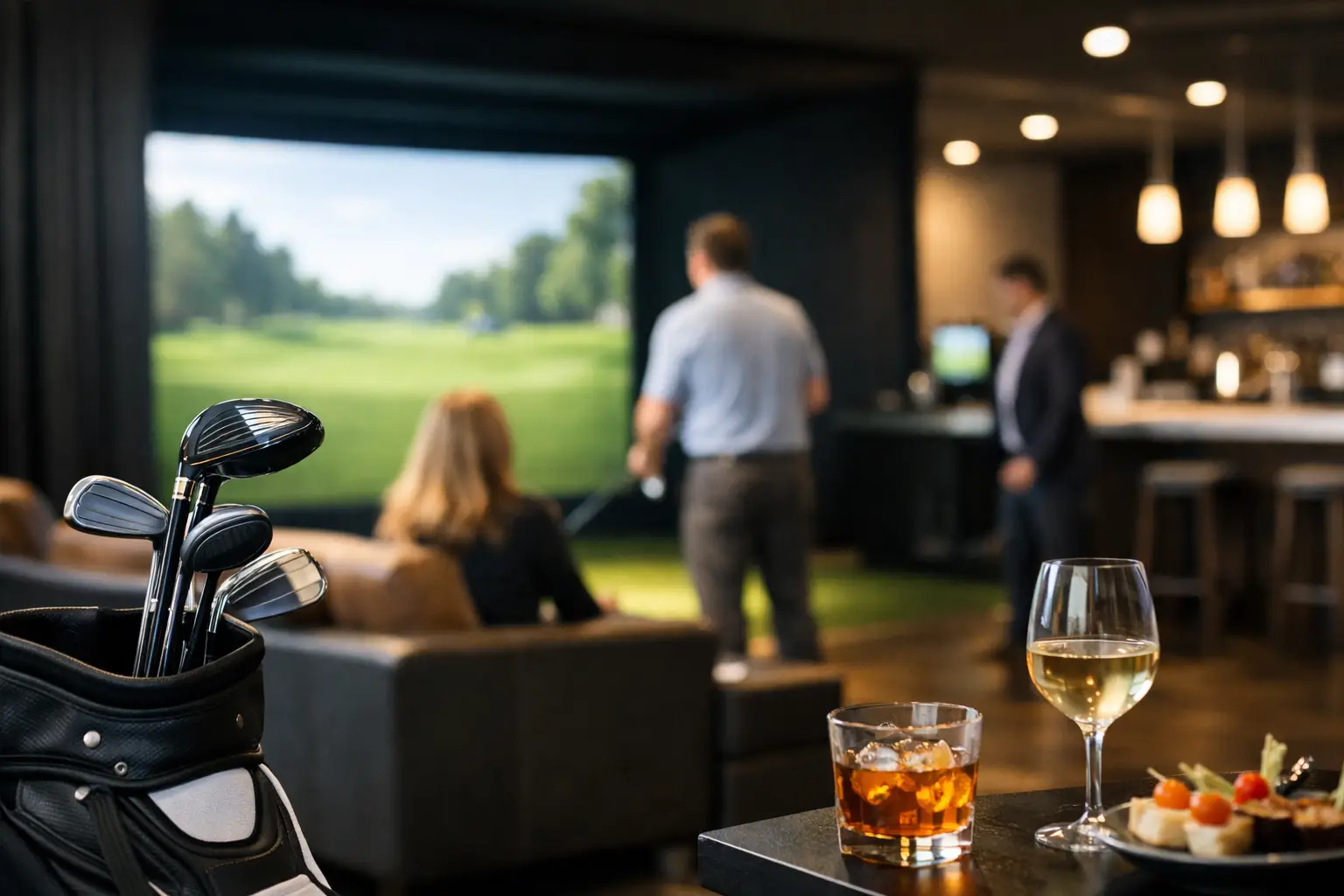
A useful indoor golf event venue review should do more than count simulator bays or admire the decor. For a corporate team, client group, birthday party, or competitive outing, the real question is whether the venue creates an experience people will talk about afterward – while giving golfers a reason to take every shot seriously.
Indoor golf events have moved well beyond basic entertainment. The best venues now pair advanced shot data and realistic course play with the kind of pace, comfort, and hospitality that makes a group event feel polished. That combination matters whether your guests are low-handicap players, first-time golfers, or a mix of both.
What Separates a Premium Indoor Golf Event Venue
An event can have great food, a strong guest list, and a beautiful invitation, then still lose energy if the golf activity is confusing or slow. Indoor golf works best when it gives every guest a clear way to participate. Players need enough realism to stay engaged, while non-golfers need an approachable format that does not make them feel like spectators.
Start with the simulator technology. Basic systems can be entertaining, but a premium event venue should deliver reliable ball and club data, responsive gameplay, and visual detail that makes the course feel credible. When guests hit a shot, they should immediately understand what happened and why. Accurate feedback turns a casual swing into a moment of competition, conversation, or genuine improvement.
The physical hitting experience is equally important. A static hitting platform may be fine for a quick round, but it cannot recreate the changing lies that make golf strategic. Technology such as moving swing plates and multi-surface hitting mats adds a meaningful layer of realism, allowing players to face uphill, downhill, sidehill, fairway, rough, and bunker-style conditions. For experienced golfers, that detail earns credibility. For newer golfers, it makes the experience more memorable than simply hitting balls at a screen.
The Event Experience Starts Before the First Tee Shot
A strong venue does not leave the host to solve every logistical detail. Before guests arrive, the team should help shape the format around the group size, event goals, available time, and skill range. A four-person client outing needs a different plan than a 30-person team-building event or junior golf celebration.
For smaller groups, a full simulated round can create a relaxed and social pace. For larger groups, contests often work better. Closest-to-the-pin, longest-drive, target challenges, and short-format course competitions keep people moving and give every guest a chance to contribute. The best format depends on whether the event is built around networking, friendly competition, recognition, or skill development.
Timing deserves close attention. A venue may have excellent simulators, but an event loses momentum when too many people wait too long for their turn. Ask how the venue manages bay assignments, rotates groups, tracks scoring, and keeps competition moving. Auto-tee systems can make a noticeable difference here. By returning the ball to a consistent position after each shot, they reduce setup time and keep the group focused on play rather than logistics.
A thoughtful event coordinator should also build in time for arrivals, instruction, food service, award announcements, and informal conversation. Golf is the anchor, but the event should never feel like an assembly line of swings.
Technology Should Feel Impressive, Not Intimidating
Advanced technology can elevate an event, provided guests can use it without a long learning curve. The highest-performing venues make sophisticated tools feel intuitive. Players should see their shot results quickly, understand the game format, and receive help when they need it.
High-speed impact cameras are especially valuable for groups that include serious players or guests interested in improving. At 400 frames per second, impact footage can reveal details that are impossible to see with the naked eye. That gives an instructor or experienced host a way to explain ball contact, face position, and swing delivery in a visual, practical way.
Still, not every event needs a technical breakdown after every shot. A good venue reads the room. A sales team may want fast contests and easy banter. A group of competitive amateurs may want launch data, detailed scoring, and realistic course conditions. A parent planning a junior event may prioritize supportive coaching and structured activities. Premium service means adapting the experience instead of forcing every group into the same script.
Realism Is More Than a Nice Feature
The gap between an entertainment simulator and a performance-driven golf experience becomes obvious once golfers begin playing. If distances feel inconsistent, putting feels artificial, or course conditions never change, experienced players quickly disengage. They may enjoy the social setting, but they will not view the event as meaningful golf.
Golfzon TwoVisionNX technology helps close that gap with immersive course visuals, realistic ball behavior, automatic ball placement, and moving plates that respond to the next shot. The result is a more complete test of decision-making. Players have to consider their lie, slope, target, and club selection, not simply swing as hard as possible from a perfect flat mat.
That realism also improves the social side of an event. A difficult downhill lie, a well-struck approach, or a surprise bunker shot creates natural moments for the room to react. Guests do not need to be experts to appreciate an exciting result. The technology creates a shared experience rather than a series of isolated turns.
Service and Space Can Make or Break the Day
Even the most advanced simulator cannot compensate for a cramped setup, unclear event flow, or inattentive staff. Guests need enough room to swing comfortably, watch teammates, talk between turns, and enjoy food or drinks without feeling squeezed into a waiting area.
Look for a venue where the event space supports both play and connection. Comfortable seating, clean presentation, clear screens, and a polished atmosphere signal that the group is being hosted, not merely booked into a simulator bay. This is especially relevant for client entertainment, company celebrations, and leadership events where the setting reflects on the host.
Staff involvement matters just as much. Someone should be available to welcome guests, explain the format, troubleshoot equipment, record contest results, and keep the experience moving. For groups with a wide range of ability, an experienced golf professional can be an advantage. A few simple pointers from a PGA professional can help beginners make solid contact and give serious players useful context without turning a social event into a formal lesson.
Questions Worth Asking Before You Book
Before choosing a venue, ask whether the simulator system measures both ball and club performance, whether the hitting surface adjusts for changing lies, and how the staff handles large-group pacing. Those answers reveal more than a promotional description ever will.
It also helps to ask whether the venue can tailor games to your group, support individual and team scoring, and accommodate guests who do not own clubs or have never played. The right venue will be direct about what works best for your headcount and schedule. A full round may sound appealing, but a structured contest format can produce a stronger event when time is limited.
For Arizona groups, year-round climate control is a major practical benefit. A summer afternoon, an unexpected weather shift, or an evening schedule does not have to dictate whether your guests can play. Indoor golf keeps the experience consistent while preserving the competitive spark that draws people to the game.
At 24 Precision Golf, the strongest event experiences are built around that balance: advanced realism for players who care about performance, approachable formats for guests who are new to the game, and professional support that keeps the room engaged.
The best indoor golf event is not the one with the most screens or the loudest contests. It is the one where guests feel included, the competition has real energy, and every player leaves with a story about a shot they will want to take again.
Sources and further reading
- Evidence-based team-development interventions American Psychological Association
- Corporate and group events 24 Precision Golf
- The golf simulator market: trends and insights National Golf Foundation