When Should Juniors Start Golf Lessons, Exactly?
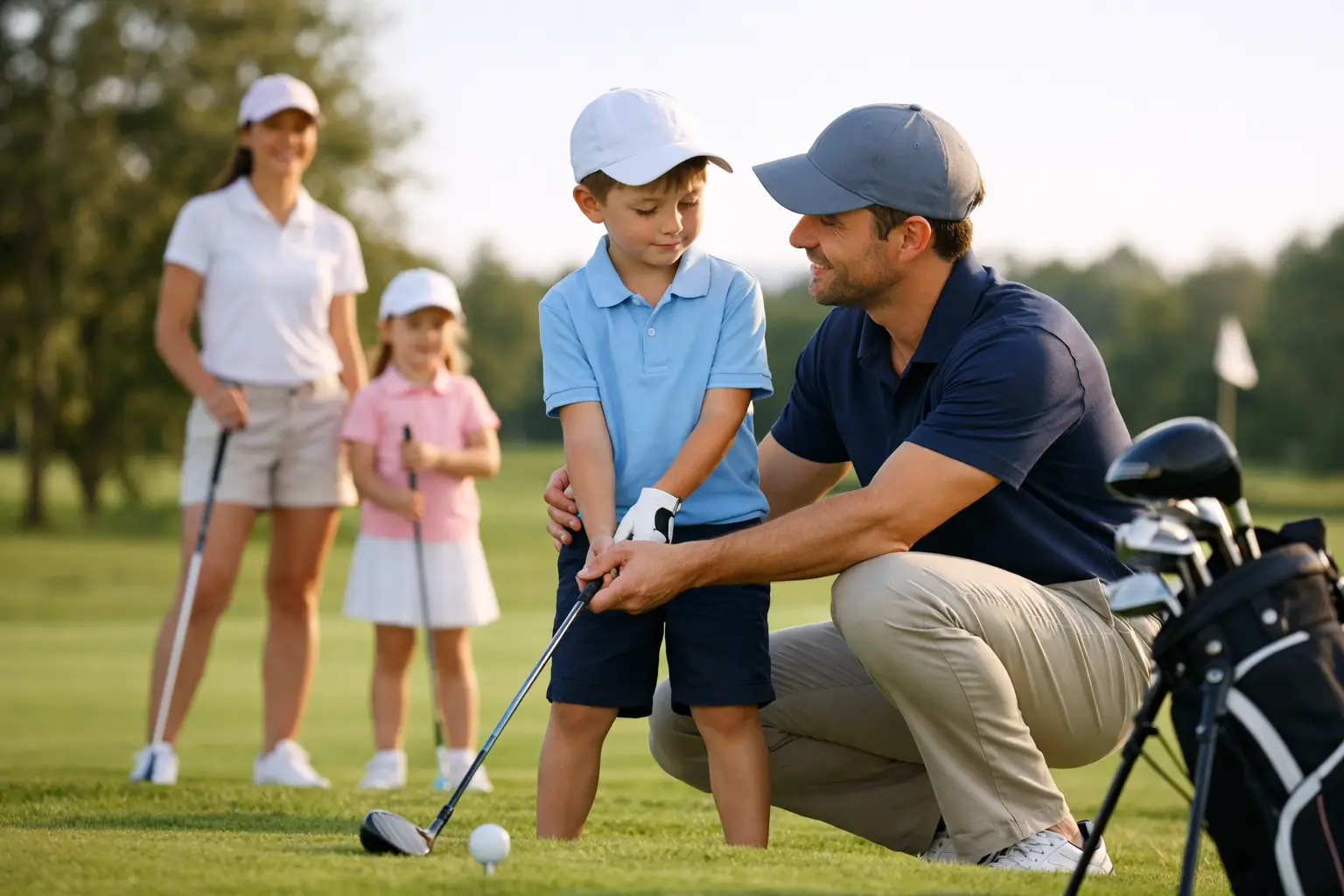
A child does not need to wait until they can hit a driver 150 yards to benefit from golf instruction. When parents ask when should juniors start golf lessons, the better question is whether their child is ready to enjoy a structured learning experience. For many kids, that point arrives between ages 5 and 7. For others, it may be earlier or later – and that is completely normal.
The right first lesson is not about building a perfect swing. It is about giving a young player a positive, active introduction to the game while developing the movement, focus, and confidence that make improvement possible.
When Should Juniors Start Golf Lessons?
Most juniors can begin introductory golf lessons around age 5 or 6, provided they can follow simple directions, take turns, and stay engaged for a short session. Those basics matter more than age alone. A 5-year-old who is excited to swing a club and can focus for 20 to 30 minutes may be more ready than an 8-year-old who feels pressured to be there.
Young children learn golf differently from adults. They are not looking for a technical explanation of club path or face angle. They learn through motion, games, targets, repetition, and encouragement. A quality junior program meets them at that stage, using appropriately sized equipment and simple challenges that make each success feel meaningful.
Parents should also separate starting lessons from committing to a competitive track. Beginning early does not mean a child must play tournaments, specialize in golf, or practice every day. It simply gives them a chance to build familiarity with the game in a low-pressure setting.
Readiness Matters More Than a Birthdate
A junior is usually ready for lessons when they show curiosity about golf and can participate safely in a group or one-on-one setting. They do not need previous experience. In fact, starting before unproductive habits become ingrained can make early coaching especially efficient.
Look for a child who can listen briefly, try again after a missed shot, and handle shared space around clubs and balls. Their attention span does not need to be perfect. Good junior instruction is designed around short activities and frequent movement, not long lectures.
Interest is the strongest signal. Maybe your child watches you play, asks to visit the range, enjoys mini golf, or keeps borrowing a plastic club at home. That curiosity is worth following. A child who feels ownership over the experience is more likely to return, practice, and develop a lasting relationship with the game.
There is one important exception: do not force lessons simply because golf seems like a valuable activity or because an older sibling plays. Golf rewards patience, and a reluctant junior can quickly associate the sport with frustration. If enthusiasm is not there yet, keep the introduction casual. A few fun swings, a family outing, or a simulator session may be the better first step.
What a First Junior Golf Lesson Should Accomplish
The first few lessons should leave a junior wanting to come back. That is the benchmark. A coach may introduce grip, posture, alignment, and basic putting or chipping, but the priority is creating early wins.
For younger beginners, those wins may be as simple as making contact, rolling a putt toward a target, or learning how to hold and carry a club safely. As juniors grow, instruction can begin connecting their setup and movement to ball flight. The pace should match both their physical development and their ability to understand feedback.
A strong first-session experience typically includes movement, skill games, and a clear sense of progress. Rather than hitting ball after ball without purpose, juniors should have targets to aim at and challenges they can understand. Did the ball start on the intended line? Did it reach the target zone? Can they repeat that shot once or twice?
That approach creates a foundation that lasts. Children who learn that golf is a game of problem-solving, not just a test of whether they hit a good shot, tend to become more resilient players.
Why Indoor, Data-Driven Instruction Helps Juniors
For many families in the Phoenix metro area, heat and scheduling can make outdoor practice difficult for much of the year. Indoor instruction gives juniors a consistent place to learn without weather interruptions, long walks between shots, or the distraction of a crowded range.
The right simulator environment can also make feedback easier for young players to understand. Instead of relying only on a coach saying that a shot was too far right or too low, a junior can see the result immediately. Ball flight visuals, target lines, and simple performance data turn a vague feeling into something concrete.
At 24 Precision Golf, Golfzon simulator technology adds a level of realism that supports that learning. High-speed impact cameras can help a PGA professional identify what happened at contact, while moving swing plates and multi-surface mats expose developing players to more realistic lies as they advance. For a beginner, none of that means being overloaded with numbers. It means the coach has accurate information and can deliver a simpler, more useful correction.
Technology should support instruction, not replace it. A young golfer does not need to memorize launch angle or spin rate. But when a coach can clearly show why a ball started left, came up short, or reacted differently from a downhill lie, the lesson becomes more engaging and less mysterious.
How Often Should Junior Golfers Take Lessons?
For a new junior, one lesson per week or every other week is usually enough. The ideal schedule depends on age, interest, lesson length, and whether the child has opportunities to play or practice between sessions. More is not always better, particularly for younger golfers who need time to absorb what they have learned.
A consistent rhythm matters more than an aggressive one. A child who takes one enjoyable lesson each week for three months will usually make better progress than one who takes several lessons in a short burst and then stops. Repetition builds coordination, but enjoyment keeps that repetition going.
Between lessons, keep practice light and specific. Five or ten focused minutes of putting, target games, or a few relaxed swings can be valuable. Avoid turning every family golf activity into a correction session. Let the coach handle technical instruction, while parents protect the fun.
As a junior becomes more committed, coaching can become more structured. Older players may benefit from a plan that includes swing development, short-game training, on-course strategy, physical preparation, and measurable goals. At that point, simulator data can help track changes over time without guessing whether a new move is actually improving performance.
Age-Based Expectations Without the Pressure
A 5- to 7-year-old should primarily learn athletic movement, safety, basic club handling, and enjoyment. The focus is often putting, chipping, and making contact with shorter clubs. Keep expectations simple: participation, effort, and curiosity are wins.
From roughly ages 8 to 11, juniors can generally absorb more structure. They can begin understanding alignment, shot shape, distance control, and basic etiquette. They may enjoy skills challenges, junior leagues, and playing simulated courses that make each session feel like a game rather than a drill.
By the early teen years, a motivated junior may be ready for more individualized coaching. This is when technical changes, scoring strategy, tournament preparation, and performance goals can take on a larger role. Still, development is not linear. Growth spurts can change a player’s coordination quickly, and a temporary step back in ball-striking is often part of the process.
The trade-off is simple: starting early creates familiarity, but pushing advanced expectations too early can drain the fun. Starting later can mean a steeper initial learning curve, but an older junior may have more focus and motivation. Either path can lead to excellent golf.
Choosing the Right Lesson Environment
The best junior lesson environment feels organized without feeling intimidating. Ask whether the instructor has experience coaching children, how groups are divided, and whether lesson goals change by age and skill level. A program built for adult beginners is not automatically a fit for a 6-year-old.
Consider the practical details, too. Shorter lessons may work best for younger children. Small groups can provide social energy, while private instruction may help a junior who needs more individual attention or has a specific competitive goal. The right answer can change as your child develops.
Most of all, pay attention to how your junior feels after the session. If they are talking about a shot they made, asking when they can return, or showing you a new game they learned, the program is doing something right. Give them room to enjoy the small victories – the confidence built there often becomes the reason they keep playing.
Sources and further reading
- American Development Model: Learn to Play PGA of America
- A parent's guide to working with a PGA coach PGA of America
- Junior golf programs 24 Precision Golf