Golf Simulator Impact Cameras Explained
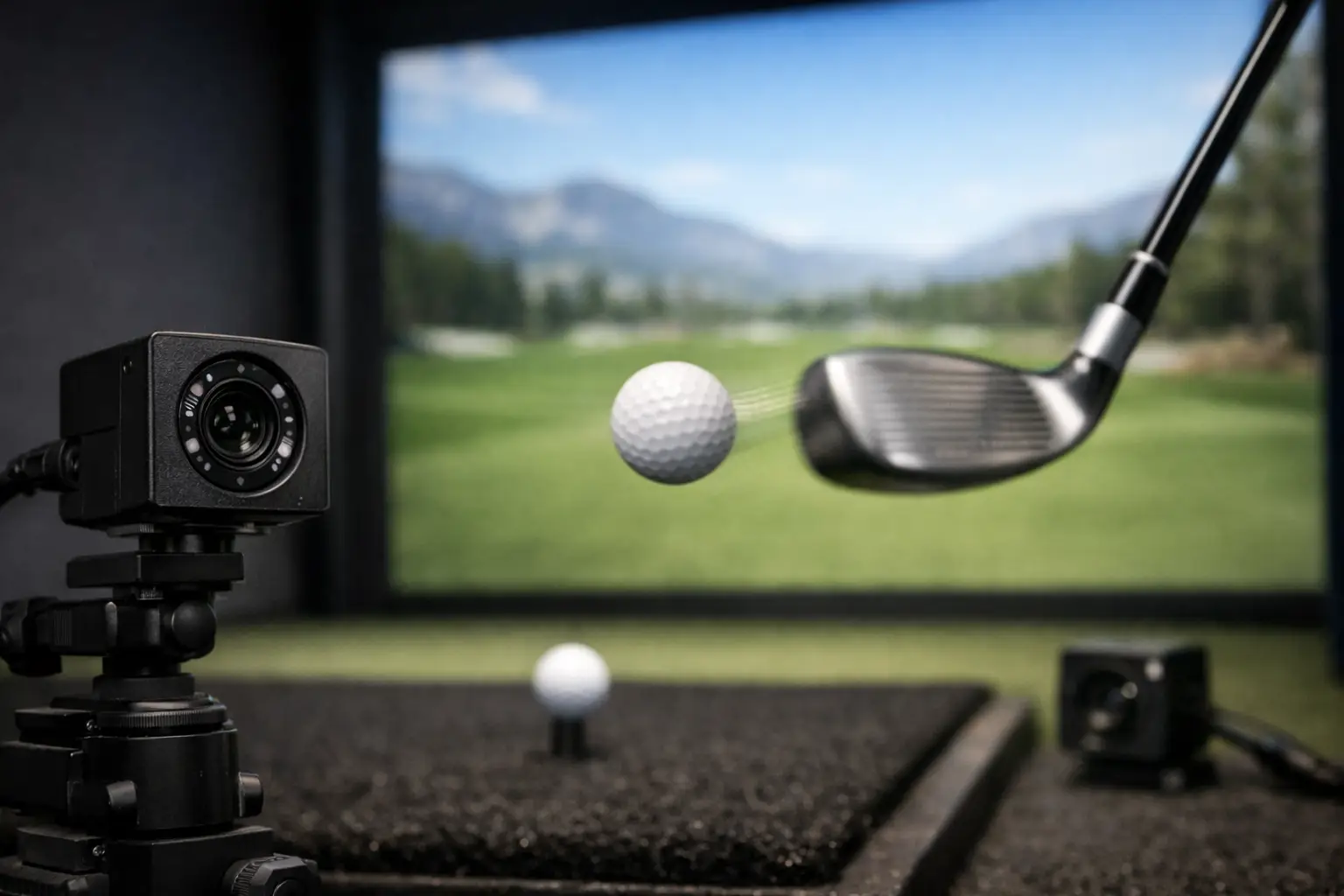
A mishit tells you something. A clean strike tells you something else. But golf simulator impact cameras show you exactly what happened at the moment of truth, and that changes how quickly a player can improve.
For golfers who care about more than a rough guess, impact cameras add a layer of feedback launch numbers alone cannot provide. Ball speed, spin, and launch angle matter. So does seeing whether the face was open, where the ball contacted the club, and how your delivery changed from one swing to the next. That visual confirmation is often what turns a confusing range session into productive practice.
What golf simulator impact cameras actually do
Golf simulator impact cameras are high-speed cameras positioned to capture the instant your club meets the ball. In premium simulator environments, they record contact in fine detail, often frame by frame, so players and coaches can review strike location, face presentation, and turf interaction.
That matters because impact happens fast – far too fast for the naked eye. You may feel a shot off the toe, but feel is not always reliable. A camera can confirm whether contact was centered, slightly thin, heel-side, or affected by clubface angle at impact.
In advanced setups, this visual data works alongside launch monitor readings rather than replacing them. One tells you what the ball did. The other helps explain why it did it. That pairing is where simulator training becomes far more useful than simple entertainment.
Why golf simulator impact cameras matter in real practice
A lot of golfers chase outcomes without understanding the cause. They see a push, a low spinner, or a shot that comes out dead and start making swing changes based on guesswork. That is where impact footage becomes valuable.
When you can review the strike itself, you stop assuming. If the face was slightly open and contact drifted toward the toe, that is a different problem than a centered strike with poor path. If you hit behind the ball from a simulated rough lie, that tells a different story than catching it thin from a level stance.
This is especially useful for players who are working on consistency. Big swing changes get attention, but many scores are shaped by strike quality. Center contact, face control, and predictable low point are what separate random good shots from repeatable ball flight.
For coaches, impact footage also shortens the gap between instruction and understanding. Instead of saying, “That one was a little heavy,” they can show the player the exact interaction. The lesson becomes clearer, and players tend to trust the correction faster when they can see it.
What to look for in golf simulator impact cameras
Not all systems are equally useful. The phrase “impact camera” can describe anything from a basic replay view to a true high-speed capture system that provides meaningful feedback. If accuracy and improvement matter to you, a few details make a real difference.
Frame rate matters
Impact happens in a fraction of a second, so camera speed is critical. A low-frame-rate camera may give you a replay, but not enough detail to analyze contact properly. High-speed systems, including 400 FPS camera technology used in premium simulator environments, provide much cleaner visual evidence of what happened through impact.
That added detail is not just for elite players. Beginners benefit too, because clear visuals help connect feel with reality. A newer golfer may think they are sweeping the ball cleanly when the camera shows the club bottoming out early.
Camera angle and clarity
A useful impact camera needs the right view. If the angle does not clearly capture face-to-ball interaction, the replay loses value. Sharp imaging, proper lighting, and consistent positioning all affect whether the footage actually helps.
This is one reason facility quality matters. In a serious training environment, the camera is part of an integrated system, not an afterthought bolted onto a screen.
Integration with simulator data
The strongest setups combine visual strike footage with measured shot data. If you can watch the impact and compare it to launch, spin, carry, and side axis, you get a complete picture. That combination supports better coaching, better self-diagnosis, and better decisions during practice.
Impact cameras and realistic simulator play
Impact cameras are even more valuable when the simulator itself creates realistic conditions. A flat mat and generic ball flight can be fun, but it only goes so far for players who want their practice to transfer to the course.
In a premium environment with moving swing plates, changing lies, and multi-surface hitting mats, impact footage becomes more revealing. You can see how your strike changes on an uphill lie, from a bunker-style surface, or when the ball sits differently under your feet. That is far closer to actual golf than repetitive level-ground swings.
This is where modern simulator technology starts to separate performance venues from basic entertainment setups. The goal is not just to watch a replay. The goal is to create conditions where the replay teaches you something relevant to on-course play.
Who benefits most from golf simulator impact cameras
The short answer is almost everyone, but for different reasons.
Beginners benefit because visual feedback speeds up learning. It is easier to understand solid contact when you can actually see what solid contact looks like. That can make early improvement less frustrating.
Recreational golfers benefit because most are fighting a small number of recurring misses. If you tend to hit weak fades, heavy wedges, or inconsistent irons, impact footage helps identify patterns that would otherwise feel random.
Competitive players benefit because small strike variations matter. A shot that loses a few miles per hour of ball speed or launches with the wrong spin profile can be the difference between attacking and scrambling. For those players, high-speed footage supports the kind of precision practice that lowers scores.
Junior golfers also gain a lot from this technology. Young players often improve faster when instruction is visual and immediate. When paired with structured coaching, impact cameras can make technical concepts easier to absorb without overloading the player.
What impact cameras cannot do on their own
As useful as they are, impact cameras are not magic. They show the strike, but they do not automatically tell you how to fix it. A heel strike might come from setup, sequencing, posture, or club path. The camera reveals the symptom. Solving the cause still takes context.
That is why the best use of this technology is guided use. A knowledgeable coach or a well-designed practice plan matters. Otherwise, players can end up staring at footage and making too many changes too quickly.
It also depends on your goal. If you just want to play a casual round with friends, impact cameras may be a nice bonus rather than the main attraction. If you are practicing with intent, dialing in distances, or working through a pattern, they become much more important.
Why premium facilities make the technology more useful
Technology is only as good as the experience built around it. A high-end indoor golf facility does more than provide cameras. It creates a setting where the data is accurate, the visual feedback is clear, and the practice environment supports real improvement.
That includes reliable simulator calibration, realistic lie conditions, quality mats, fast system response, and access to instruction when needed. In a venue built around performance, the technology feels purposeful. It is there to help you practice better, play sharper, and get more value from every session.
For golfers in the Phoenix metro area, that kind of indoor setup also solves a practical problem. You can train consistently without weather getting in the way, and you can do it with tools that go far beyond basic screen golf. At 24 Precision Golf, that means advanced simulator technology designed to make every shot more informative, more realistic, and more useful.
If you are choosing where to practice, look past the screen graphics and the novelty factor. The best simulator experience is the one that shows you what your swing is actually doing, then gives you the right environment to improve it. That is where impact cameras earn their place.