How to Improve Short Game Practice Indoors
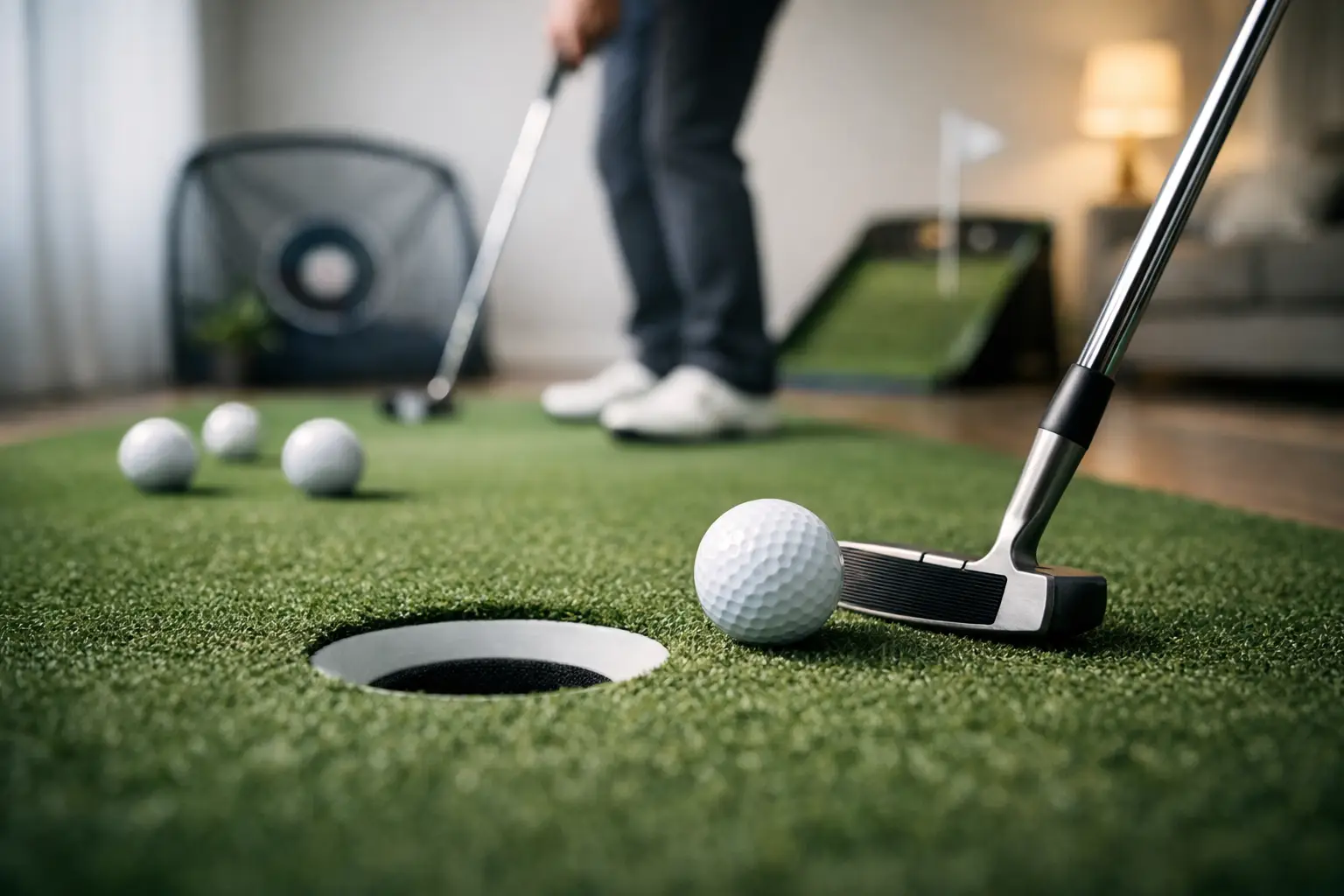
A lot of golfers can stripe a few full swings on the range and still give shots away inside 50 yards. That is exactly why short game practice indoors matters. When the space, setup, and feedback are right, indoor work can sharpen contact, distance control, launch, and decision-making in a way that random bucket practice often does not.
The key is understanding what indoor short-game work can do extremely well and where it has limits. If you treat it like a poor substitute for outdoor practice, it will feel flat. If you build a focused routine around measurable feedback, realistic lies, and repeatable reps, it becomes one of the most efficient ways to improve scoring.
Why short game practice indoors works
Most short-game problems are not caused by a lack of effort. They come from inconsistent strike, poor speed control, and vague awareness of what the club is doing through impact. Indoor training helps because it strips away noise. There is no changing wind, no rushed warm-up, and no guessing whether that last chip checked because of the turf, the groove, or the strike.
In a quality simulator environment, you get a cleaner picture of what happened. Launch, spin, ball speed, carry, and starting direction tell you whether your motion is producing a shot you can trust. That feedback matters more than people think, especially on partial wedges where feel can be misleading.
There is also a convenience advantage that should not be underestimated. Good players improve because they stack quality reps over time. Indoor practice makes that possible year-round, whether it is a hot Phoenix afternoon or a packed weekly schedule that leaves you only a narrow training window.
What to focus on during short game practice indoors
Indoor practice gets better fast when you stop trying to do everything at once. The smartest sessions usually revolve around three skills: centered contact, predictable carry distance, and trajectory control.
Start with contact before touch
A thin chip and a heavy chip can both ruin a hole, even if your technique looks solid on video. That is why the first priority should be strike quality. Indoors, you can isolate setup, handle position, low-point control, and face stability without the distraction of uneven weather or inconsistent turf.
This is where realistic hitting conditions matter. A premium simulator bay with multi-surface mats and changing lie conditions gives you a better test than a flat mat that lets every shot slide through. If the surface asks you to react to tight lies, rough-like texture, or different ground interactions, your motion has to hold up under more realistic demands.
Then train carry numbers
A strong indoor short game session is built around carry, not hope. For chips, pitches, and partial wedges, the ball needs to land where you intend. Rollout changes based on green speed and spin, but carry is your first controllable number.
If you know your stock carry for a 20-yard, 35-yard, and 50-yard shot, you make faster and better decisions on the course. This is one of the biggest advantages of simulator-based practice. Instead of saying, “That felt pretty good,” you can see the actual result and start building a reliable distance map.
Work on trajectory on purpose
A lot of golfers have one short-game speed and one default flight. That can work on a simple lie with room to run the ball, but it falls apart when the shot asks for something specific. Indoors, trajectory practice is more useful than many players realize.
Try hitting the same carry number with a lower flight and then a slightly higher one. If both land near your target but require different deliveries, you are training adaptability. That becomes valuable when you face a tucked pin, a forced carry, or a lie that changes how the club enters the turf.
The indoor tools that actually make a difference
Not every indoor setup is equal. If your goal is entertainment, almost any net and mat can be fun. If your goal is lower scores, the details matter.
High-speed cameras help you understand strike and face presentation in a way your memory cannot. Advanced launch data adds precision to partial shots, where small differences in club delivery create big differences in outcome. Auto-tee systems keep the session moving, which sounds minor until you realize how much better practice gets when rhythm is not constantly interrupted.
The biggest separator, though, is realism under your feet. A system that incorporates moving swing plates and varied hitting conditions creates a more demanding, course-like environment. That matters for short game because clean mechanics on a perfect flat surface do not always transfer to the real world. At a facility like 24 Precision Golf, the value of advanced Golfzon technology is not just that it looks impressive. It is that the feedback is detailed enough, and the hitting conditions realistic enough, to make indoor reps translate outdoors.
A smarter indoor short-game session
The best sessions are structured, but not robotic. You want enough repetition to groove patterns and enough variation to test them.
Block practice first
Begin with one shot and one intention. Hit 10 to 15 chips or pitches to the same landing spot. Watch the carry, launch, and strike pattern. This phase is for calibration. You are finding the motion, tempo, and setup that produce predictable contact.
If the strike pattern is poor, do not rush into harder shots. Indoor practice exposes flaws quickly. Use that to your advantage. Adjust the basics first, then repeat until the strike tightens up.
Variable practice next
Once contact is stable, change the target and the shot length. Move between short chips, medium pitches, and longer partial wedges. Change trajectory. Change the club. The point is to force your brain to solve a new problem each rep while keeping technique organized.
This is where a simulator environment becomes especially powerful. You can create consequence and context rather than just rolling balls into a net. One shot may ask for a soft landing. The next may require a lower runner. Those differences build skill faster than mindless repetition.
Pressure practice last
If every rep is comfortable, the session is incomplete. Finish by creating a simple challenge. Give yourself one ball per target. Set a scoring standard. Restart if you miss too many in a row. Pressure reveals whether your motion is stable or only functional when there is no consequence.
That does not mean practice should feel punishing. It means your final 10 minutes should ask for focus. Golf is a performance sport, and your short game needs to hold up when the shot matters.
Common mistakes in short game practice indoors
The most common mistake is practicing only the shots you already like. A golfer who loves the low checker may never train the higher, softer pitch until a course forces the issue. Indoor sessions should expose gaps, not protect them.
Another mistake is overvaluing aesthetics. A pretty motion is not the goal. A shot that launches on the intended window, carries the right number, and lands with control is the goal. Sometimes the feedback will tell you a shot worked even though it felt unusual. That is worth paying attention to.
There is also the issue of unrealistic expectations. Indoor work can dramatically improve mechanics, strike, and distance control, but touch still has a context component. Green firmness, grain, moisture, and slope all influence real-world rollout. That does not mean indoor practice falls short. It means you should use it to build reliable delivery and carry windows, then blend that with on-course awareness when conditions change.
Who benefits most from indoor short-game training
Beginners benefit because indoor practice creates a more controlled learning environment. Instead of guessing what caused a poor shot, they can see measurable patterns and make quicker corrections.
Recreational golfers benefit because it respects their time. A focused 45-minute session with accurate feedback can be far more productive than a long, unfocused range visit. Competitive players benefit because they can test precision under realistic conditions, track tendencies, and refine scoring shots with a level of detail that ordinary practice often misses.
Juniors also gain a lot from indoor structure. Short-game skills improve when young players understand not just how to swing, but how different motions create different outcomes. Measurable feedback speeds up that learning curve.
Making indoor practice translate to the course
The final step is simple but often skipped. After a few indoor sessions, identify your stock shots. Know your preferred chip trajectory, your go-to pitch carry numbers, and your most reliable partial wedge swings. Those become your on-course anchors.
From there, use indoor work to support decision-making, not replace it. The course will still ask for creativity, but creativity works best when it is built on repeatable patterns. That is the real value of short game practice indoors. It gives you a controlled place to build trust in the shots that save pars, set up birdies, and keep rounds from drifting.
The golfers who improve fastest are usually not the ones chasing miracle tips. They are the ones who make practice more precise, more honest, and easier to repeat. Indoors, that opportunity is available every month of the year, and that consistency tends to show up where it matters most – on the scorecard.