Why Junior Golf Lessons Indoor Work
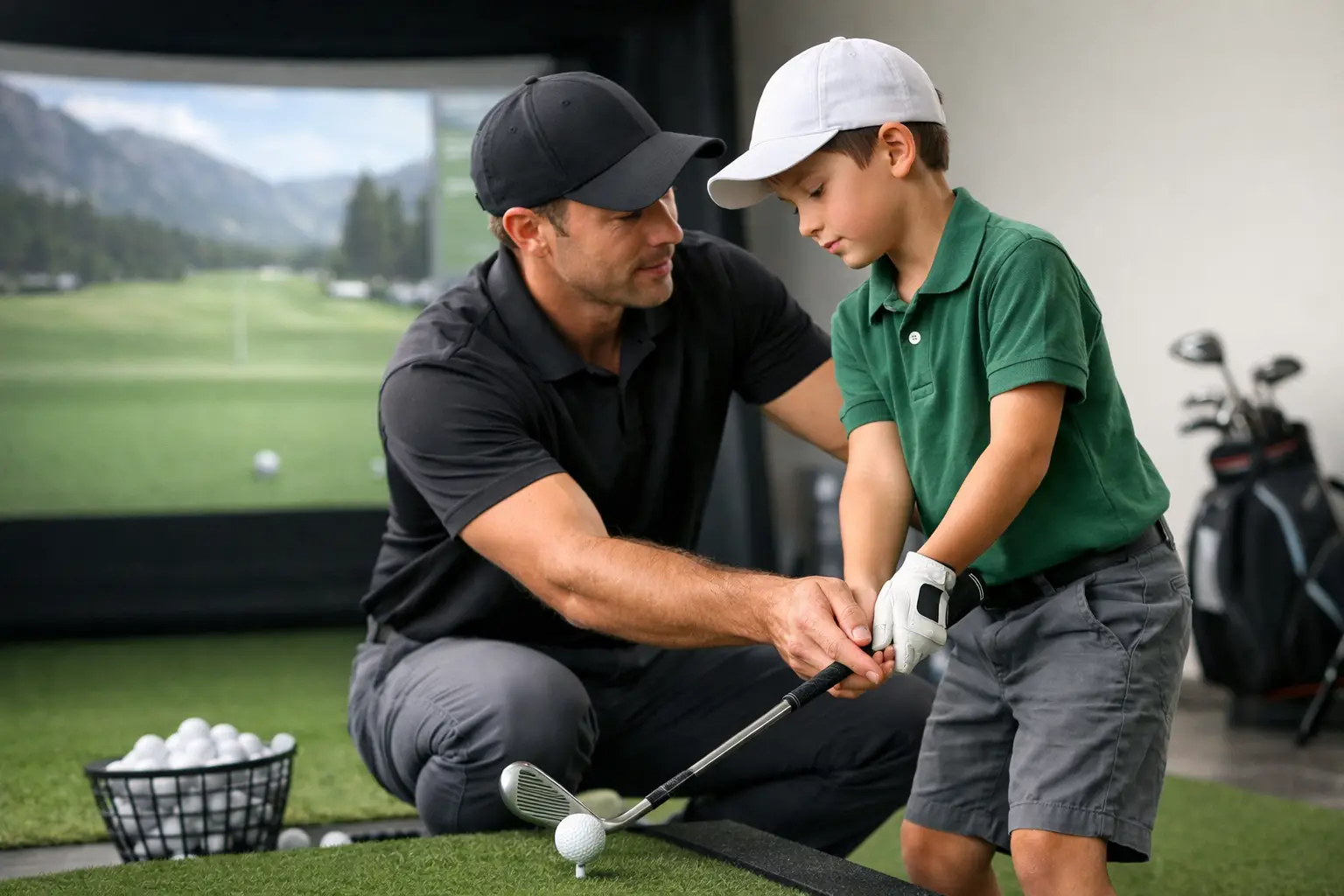
A junior golfer does not need perfect weather, a full 18 holes, or a three-hour block on the family calendar to make real progress. Junior golf lessons indoor work because they remove the friction that usually slows development. When a young player can step into a controlled space, hit quality shots, get immediate feedback, and stay engaged, improvement becomes more consistent.
That consistency matters more than most parents realize. Kids rarely improve from occasional long sessions alone. They improve from repetition, clear coaching, and a setting that keeps them focused without making golf feel like a chore. Indoor instruction can deliver exactly that when the facility is built for performance rather than just entertainment.
What makes junior golf lessons indoor so effective
The biggest advantage is control. Indoors, a coach can manage the environment from the first swing to the last. There is no wind changing ball flight, no heat draining attention, and no waiting on a crowded range. A junior player can spend more of the lesson learning and less of it dealing with distractions.
That creates better teaching moments. If a coach wants to work on face angle, low-point control, or a more balanced finish, the player gets immediate data and a clean look at what just happened. On a traditional range, juniors often hit a shot, watch the ball fly, then move on without really understanding why it curved or why contact felt thin. In a high-end simulator setting, cause and effect become much clearer.
This is especially valuable for young players who are still building body awareness. They may know a shot felt wrong, but they cannot yet describe what changed in the swing. Technology helps fill that gap. Launch data, impact visuals, and video feedback make abstract coaching cues more concrete.
The role of technology in better junior development
Not all indoor golf environments are equal. If the goal is serious junior development, realism matters. Advanced simulator systems with accurate ball and club data give instructors a much stronger foundation for teaching. Features like high-speed impact cameras show what happens at the moment of strike, not just the result afterward. That is a major difference for juniors learning solid contact.
Moving swing plates and multi-surface hitting mats also add value because they prepare players for golf as it is actually played. Real golf is not always a flat perfect lie. When juniors experience uphill, downhill, and sidehill conditions indoors, they develop adaptability sooner. That can make outdoor rounds less intimidating and far more productive.
Auto-tee systems help in a different way. They keep the lesson moving. That may sound minor, but pace matters with kids. Fewer interruptions mean more swings, more focus, and less dead time between reps. A lesson that feels active tends to hold attention better, especially for newer or younger players.
At a performance-focused facility like 24 Precision Golf, those details are not there for novelty. They create a more realistic training environment, and that realism helps a junior transfer indoor progress to the course.
Why indoor lessons often build confidence faster
Confidence in junior golf usually comes from two things – knowing what to work on and seeing proof that it is working. Indoor lessons are strong on both.
A junior can hit ten shots with one swing thought and see measurable differences in contact, carry distance, or start line. That kind of feedback is motivating. It gives players a reason to trust the process instead of guessing. For parents, it also makes progress easier to understand. You are not just hearing that your child is improving. You can see more centered contact, tighter dispersion, and better movement patterns over time.
There is also less pressure indoors for many kids. Large driving ranges and crowded courses can make beginners self-conscious. An indoor bay feels more contained and private, which often helps juniors relax and swing more freely. That matters, because tension can hide a player’s actual ability.
Of course, confidence built indoors still needs to be tested outdoors eventually. Indoor coaching should not replace all on-course experience. It should make that experience more productive by giving juniors a stronger technical base before they manage rough lies, uneven pace, and course strategy.
Indoor golf lessons for different junior skill levels
One reason junior golf lessons indoor fit so many families is that they work across development stages.
For beginners, indoor instruction strips away some of golf’s early chaos. Instead of worrying about range etiquette, pace of play, or losing balls, a new player can focus on grip, setup, and basic contact. The coach can keep the session simple and positive while still using data to reinforce good habits.
For intermediate juniors, indoor work is ideal for sharpening consistency. This is often the stage where players start to understand the game but need better control over strike, distance, and ball flight. Simulator feedback can show patterns quickly. If a player keeps missing low on the face or starts the ball left with the driver, the evidence is right there.
For competitive juniors, indoor lessons can become highly specific. Wedge gapping, driver optimization, trajectory windows, and pressure practice are all easier to structure in a controlled setting. Advanced players benefit when the technology is accurate enough to support real decision-making, not just general practice.
The trade-off is that juniors still need exposure to outdoor variables like wind, green reading, and course management under live conditions. The best development plan usually blends both. Indoor lessons are excellent for precision and repetition. Outdoor play teaches application.
What parents should look for in a junior program
If you are evaluating indoor golf instruction for your child, start with the coaching approach, not the screen graphics. A premium simulator is powerful, but only if the instruction is organized, age-appropriate, and centered on long-term development.
Look for a program that balances technique with engagement. Juniors need structure, but they also need momentum. The lesson should feel focused without becoming overly technical too early. A good coach knows when to simplify, when to challenge, and when to let a player build confidence through a few clear wins.
It also helps to ask how the technology is used. The best indoor junior lessons do not bury kids in numbers. They use data selectively to support learning. A young player may need one simple metric to focus on, while an older competitive junior can handle more detailed feedback.
Facility quality matters too. Realistic lie conditions, dependable ball tracking, and high-speed camera feedback create a much better training experience than a basic entertainment setup. If a facility promotes performance, the environment should back that up.
How junior golf lessons indoor fit busy family schedules
For many families, the practical advantage is just as important as the training advantage. Indoor lessons are easier to plan around school, work, and other sports. There is less weather uncertainty, less travel disruption, and often a more efficient use of time.
That convenience can be the difference between occasional participation and steady development. A junior who practices once every few weeks may enjoy the game, but progress tends to be slow. A junior who gets regular instruction in a reliable environment is more likely to improve, stay motivated, and build a stronger connection to the sport.
This is especially true in the Phoenix metro area, where summer conditions can make midday outdoor practice tough on both kids and parents. Indoor training keeps development moving without asking families to choose between comfort and consistency.
The best results come from balance
Junior golf lessons indoor are not a shortcut. They are a smarter way to create quality reps, better feedback, and a more consistent learning environment. For some players, that means building confidence from the ground up. For others, it means turning raw talent into repeatable performance.
The key is choosing an indoor setting that takes junior development seriously. When instruction is led well and supported by accurate technology, indoor golf becomes more than convenient practice. It becomes a clear advantage.
If your child is eager to improve, the right indoor lesson environment can make golf feel less frustrating, more measurable, and a lot more fun. That is usually when real progress starts to show.
Sources and further reading
- American Development Model: Learn to Play PGA of America
- Feedback for promoting motor-skill learning: a meta-analysis PubMed
- Junior golf programs 24 Precision Golf