Scottsdale Golf Simulator Lessons for Better Swings
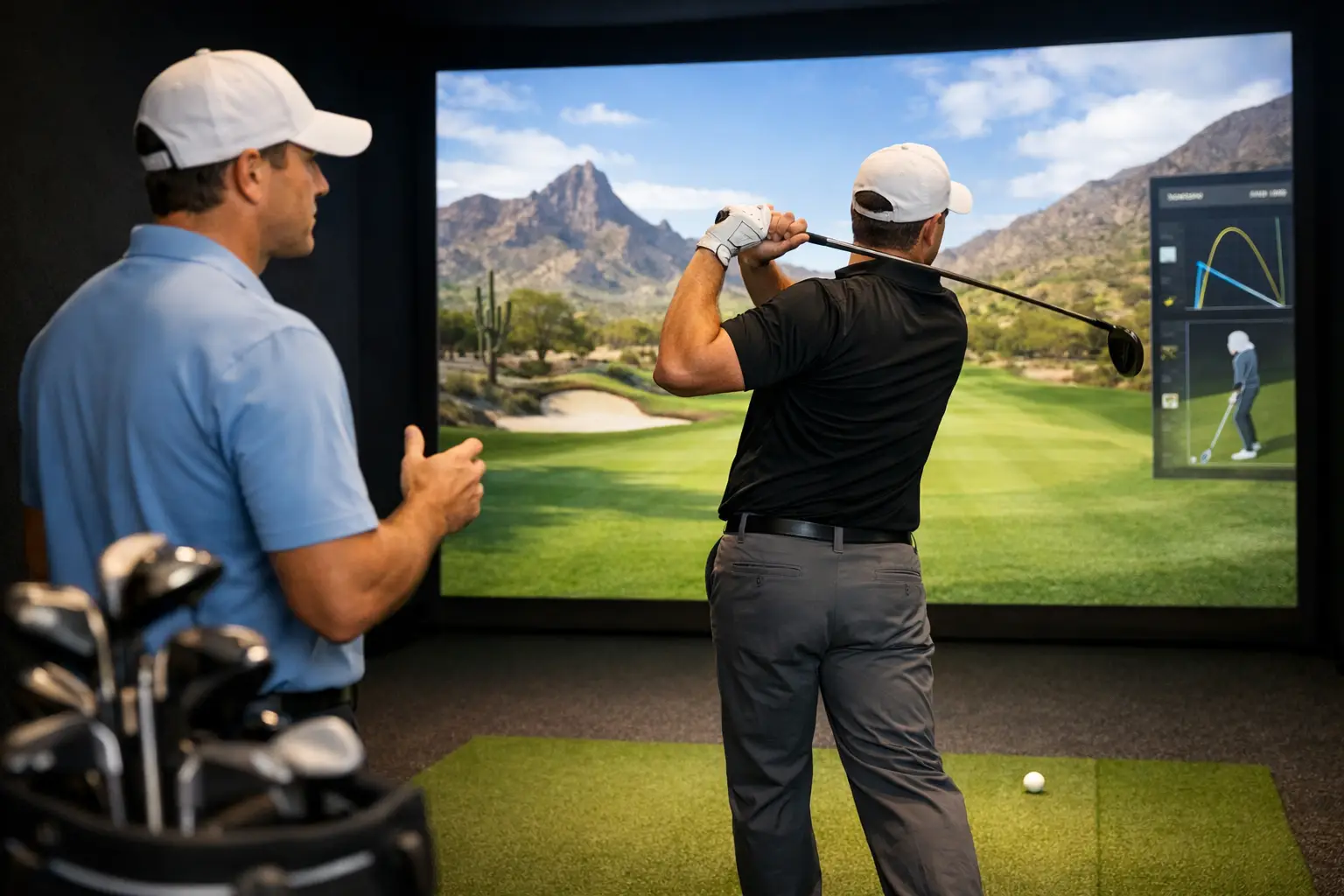
A 7-iron that starts online, carries five yards short, and finishes right tells a different story than a shot that simply “felt off.” That is the advantage of Scottsdale golf simulator lessons: every swing creates usable information, so instruction can move beyond guesswork and toward a specific next step.
For golfers in the Phoenix metro area, an indoor lesson also solves a practical problem. Practice time is limited, outdoor conditions are not always comfortable, and a range session can make it difficult to see whether a swing adjustment actually changed ball flight. A premium simulator environment gives players a controlled setting, detailed feedback, and a realistic way to train year-round.
Why simulator-based instruction produces clearer feedback
A productive lesson needs two things: an experienced coach who can identify the right priority and reliable evidence that shows whether the change is working. Simulator instruction brings those pieces together. Instead of relying only on a player’s perception of contact, the coach can examine launch, ball speed, club delivery, carry distance, shot shape, and dispersion patterns.
That does not mean data replaces coaching. A number without context can send a golfer chasing the wrong fix. A slice, for example, may be caused by face position, swing path, strike location, setup, or a combination of those variables. PGA professional instruction turns the data into a plan that fits the player rather than a collection of technical thoughts.
The payoff is efficiency. If a player is trying to add distance, tighten a driver pattern, or stop losing strokes with wedges, each shot has a purpose. The instructor can make an adjustment, test it immediately, and compare the result against the previous pattern. That short feedback loop is especially valuable for busy adults who want their practice time to translate to better decisions and better scores.
What makes a premium golf simulator lesson different
Not every simulator session is built for instruction. Entertainment-first setups can be a great place to play with friends, but serious improvement depends on accurate ball feedback, a realistic hitting experience, and technology that gives the coach enough information to diagnose patterns.
At 24 Precision Golf, Golfzon TwoVisionNX technology is designed to deliver that higher level of realism. High-speed 400 FPS impact cameras capture critical details at contact, while the auto-tee system keeps the session moving instead of turning every shot into a reset. The result is more quality reps in the same lesson window.
The moving swing plate and multi-surface hitting mat matter, too. Golf is not played from one perfectly level lie. A ball above or below the feet changes posture, balance, and the way the club meets the ground. Uphill, downhill, rough, and fairway-style conditions introduce the variables golfers face on the course, making simulator practice more transferable than repeatedly hitting from a flat mat.
There is a trade-off worth understanding. Indoor technology can measure performance exceptionally well, but it cannot perfectly recreate wind, temperature, turf firmness, or every visual element of an outdoor course. The strongest approach is to use the indoor environment to build repeatable mechanics, predictable distances, and better strike patterns, then test those gains outside when possible.
How a lesson should be structured
The best lesson is not necessarily the one with the most swing changes. It is the one that identifies the most meaningful opportunity and gives the player a way to own it between sessions.
Start with a real performance goal
A first session should begin with the golfer’s actual objective. A beginner may want to make consistent contact and understand a basic setup. A recreational player may want to eliminate a damaging miss off the tee. A competitive amateur may be looking for tighter approach dispersion from 150 yards or more reliable speed without sacrificing control.
Those goals shape the lesson. Someone struggling with contact does not need a complicated conversation about optimizing launch. A player preparing for tournament golf may need more precise baseline numbers and a structured plan around shot windows, carry distances, and pressure practice.
Build a baseline before making changes
Before adjusting grip, posture, or motion, a coach should see the existing pattern. A sample of shots reveals more than one memorable good swing or bad swing. Is the miss consistently left? Does contact shift toward the heel as the club gets longer? Is the player losing distance because of strike, delivery, launch, or simply an unrealistic target expectation?
This baseline creates a starting point. It also prevents a common practice mistake: changing several things at once and having no idea which adjustment helped.
Train one priority with immediate evidence
Once the key issue is clear, the instruction should stay focused. The coach may use a feel, a drill, a setup adjustment, or a target-based exercise to create a new movement pattern. Then the simulator confirms whether ball flight and impact conditions moved in the intended direction.
Players do not need to become their own launch-monitor technicians. They do need a simple connection between what they are trying to feel and what the ball is doing. For example, a golfer may leave knowing that a more centered strike and a controlled face pattern produce a more playable driver window. That is actionable on the range and on the first tee.
Lessons for beginners, experienced players, and juniors
Simulator lessons work across skill levels because the environment can be scaled to the golfer. Beginners benefit from the privacy and consistency of an indoor bay. There is room to learn the fundamentals without the pressure of a crowded driving range, and visible ball flight feedback makes cause and effect easier to understand.
For established players, the value is precision. A golfer who already makes solid contact may not need a full rebuild. They may need to know why the 6-iron sometimes flies 15 yards farther, why a driver miss appears late in the round, or whether a new swing thought actually improves dispersion. Accurate measurements make those conversations more productive.
Junior golfers benefit when instruction is structured, engaging, and age-appropriate. Technology can hold attention, but it should support athletic development rather than turn every session into a search for perfect numbers. The right junior program develops fundamentals, confidence, course awareness, and a lasting interest in the game.
Make the lesson matter after you leave
A lesson creates momentum. Practice protects it. The best follow-up is usually focused rather than long: a clear setup check, one rehearsal, a defined target, and a small number of intentional shots. Randomly hitting a large bucket can feel productive while reinforcing the pattern the golfer is trying to change.
Simulator practice makes this easier to organize. A player can return to the same environment, use the same feedback, and measure progress against the initial baseline. Short-game sessions, course simulation, and structured practice can all support the lesson, depending on the goal. Someone working on scoring may benefit more from wedge distance control and putting pressure drills than another hour of driver swings.
It also helps to separate technical practice from performance practice. Technical work is where a golfer slows down, uses a drill, and concentrates on a new motion. Performance practice is where the player picks targets, changes clubs, follows a routine, and accepts the result like they would on the course. Both are necessary. Spending all of your time in either mode leaves a gap.
Choosing the right Scottsdale golf simulator lesson
When comparing Scottsdale golf simulator lessons, ask whether the facility combines instruction with technology that supports real diagnosis. Look for PGA-led coaching, clear ball and club feedback, realistic hitting conditions, and a practice path that continues after the appointment. The experience should feel polished, but it should also give you more than a fun hour indoors.
A strong lesson leaves you with clarity. You should know the pattern you are working on, the priority that matters most, and how to recognize progress in your next practice session. When every shot has a purpose and every adjustment can be tested, improvement becomes less mysterious and much more repeatable.